
FREE SHIPPING
within mainland USA
within mainland USA
Home ▸ Teak Outdoor Furniture ▸ By Location ▸ Texas Gulf Coast
Outdoor spaces along the Texas Gulf Coast contend with a demanding combination of intense sun, persistent humidity, frequent rain, and—near the water—salt-laden air. At the same time, covered patios, pools, outdoor kitchens, bayfront decks, and large gathering spaces are central to how many Gulf Coast homes are enjoyed. Furniture here should therefore be chosen for both environmental exposure and frequent use. Premium Grade A teak is particularly well suited to that combination because it offers the durability of a true outdoor material without giving up the warmth and character of natural wood.

Buying outdoor furniture for the Texas Gulf Coast is different from furnishing a patio farther inland. Heat is only part of the equation. Furniture may spend months cycling through strong sunlight, humid air, rain, damp overnight conditions, and repeated drying. Properties closer to the Gulf, bays, canals, or open water add another consideration: salt carried in moist coastal air.
Humidity matters because outdoor furniture rarely experiences moisture as a single rainstorm followed by immediate drying. Along the coast, surfaces can remain damp longer, especially on shaded patios and beneath covered outdoor areas where airflow is limited. Materials and finishes that depend heavily on staying dry deserve closer scrutiny in this environment.
This is one reason material quality matters more than simply finding furniture labeled “outdoor.” Premium teak is naturally high in oils and has a dense grain structure, giving it strong resistance to moisture, rotting, warping, and other problems associated with long-term exterior exposure.
A house overlooking the Gulf or a bay should be evaluated differently from a suburban property miles inland. Saline, humid coastal environments are particularly demanding on susceptible materials, especially exposed metals. That does not make metal furniture inherently unsuitable, but it makes material selection, construction quality, hardware, finish condition, and ongoing inspection more important.
For homeowners who prefer natural wood, teak offers an appealing alternative because the wood itself does not depend on a painted exterior coating for outdoor durability. TeakHQ's Royal Teak and Anderson Teak pieces use stainless-steel hardware, while Verandis Teak uses brass hardware.
Strong sunlight tends to receive the most attention, but the Gulf Coast's repeated transition between sun and moisture is equally important. Furniture can be soaked by an afternoon storm and then return to intense sun. Choosing materials intended for year-round exterior exposure reduces the need to treat every weather change as a furniture emergency.
Grade A teak is designed to withstand rain, sun exposure, and temperature fluctuations. Its appearance will still change outdoors: unfinished teak naturally develops a silver-gray patina with age. That weathering is primarily an aesthetic decision rather than a sign that the furniture must be refinished.
One of the most useful distinctions for Gulf Coast homeowners is the difference between weather durability and storm preparation. Furniture can be exceptionally well suited to ordinary year-round outdoor exposure and still need to be secured or relocated when a tropical storm or hurricane threatens.
Heavier teak has a sturdier, more architectural feel than lightweight furniture, which many homeowners appreciate during everyday use. It should not, however, be treated as hurricane-proof. A sensible coastal furnishing plan includes a realistic strategy for cushions, umbrellas, accessories, and furniture itself when severe weather approaches.
Several premium furniture materials can work well here. High-quality aluminum can be attractive for homeowners who value a light, contemporary appearance, while synthetic materials may appeal to buyers who prioritize minimal routine care. Teak becomes especially compelling when the goal is a substantial natural material that can handle prolonged outdoor exposure without relying on paint or artificial stain for durability.
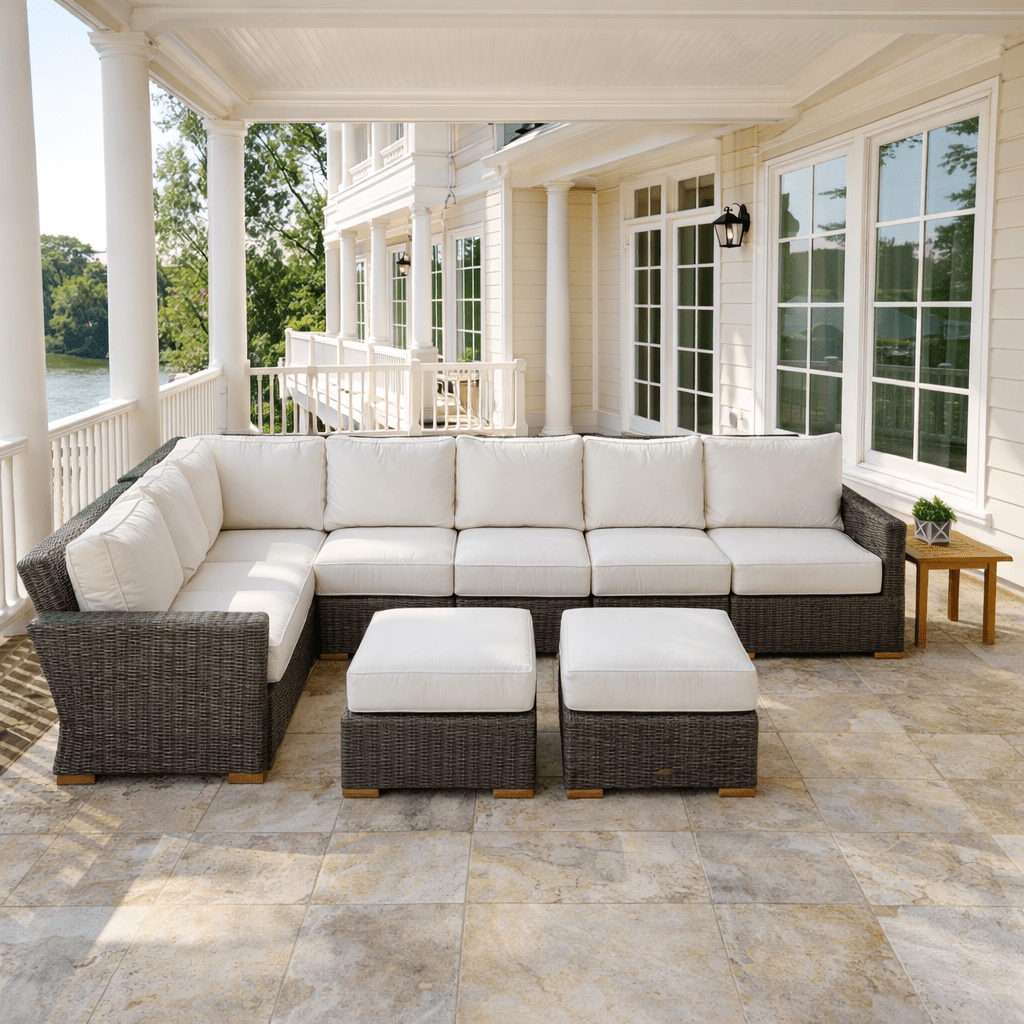 Grade A teak's naturally high oil content and dense grain are central to why it has such a strong reputation as an outdoor furniture wood. Those characteristics help it resist moisture, rot, insects, and warping—qualities that become particularly relevant where warm, humid conditions can persist for extended periods.
This does not mean teak remains visually unchanged. Natural teak gradually weathers toward silver-gray when left untreated. Homeowners who prefer the original warmer color can choose to maintain it, while those who like a relaxed coastal patina can allow the wood to age naturally.
On a Gulf Coast patio, the practical advantage of moisture resistance is not merely surviving an occasional storm. It is being appropriate for a setting in which outdoor furniture may repeatedly encounter rain, humidity, damp mornings, wet swimsuits, pool splash, and condensation.
That flexibility is valuable around pools, bayside decks, and uncovered dining terraces. Teak can be left outside year-round under normal conditions and does not require sealing simply to remain durable.
Outdoor furniture exposed to Texas sun needs to be judged by more than its showroom appearance. Teak does not require an artificial stain or painted surface for durability. Sun exposure will contribute to the natural weathering process, but homeowners have a choice: maintain the warmer teak appearance or accept the silver-gray patina.
For cushioned lounge furniture, material selection extends beyond the frame. Most TeakHQ patio seating pieces include Sunbrella cushions, which are weather-resistant, fade-resistant, UV-resistant, and water-resistant. Product details should still be checked because cushions are not included with every piece.
Premium teak is expensive compared with many mass-market patio sets, so the useful question is not whether teak has the lowest purchase price. It does not. The more relevant question for a homeowner furnishing a permanent outdoor space is how often they want to replace the furniture.
Quality teak furniture can last for decades rather than seasons. For homeowners developing a pool area, outdoor kitchen, waterfront deck, or covered patio as a long-term extension of the house, that longer ownership horizon can make the higher initial investment easier to justify.
| Texas Gulf Coast Challenge | Why Premium Grade A Teak Performs Well |
|---|---|
| High humidity | Natural oils and dense grain provide strong moisture and rot resistance. |
| Frequent rain | Designed for year-round outdoor exposure and repeated wet conditions. |
| Strong sun | Does not require paint or artificial stain for outdoor durability. |
| Wet-dry cycles | Grade A teak resists warping and normal weather exposure. |
| Coastal salt air | Natural teak offers an alternative to furniture dependent on exposed structural metal. |
| Poolside moisture | Moisture-resistant wood suits patios where splashing and wet use are routine. |
| Year-round exposure | Teak is designed to remain outdoors throughout the year. |
| Long ownership | Quality teak can provide decades of useful service with flexible maintenance. |
For most Texas Gulf Coast properties, we would begin with how the patio is actually used rather than with a furniture collection. A waterfront deck in Galveston has different priorities from a large covered patio in League City, and a Port Aransas vacation property has different demands from a primary residence with an outdoor kitchen and pool.
If weekend meals and family gatherings dominate the patio, we would make teak outdoor dining furniture the anchor. Six seats may work for everyday family use, but homeowners who regularly host relatives, neighbors, or larger cookouts should consider eight or more seats rather than choosing a table around the household's normal weekday occupancy.
An extendable teak dining table can be particularly useful where the patio needs to work at two scales: comfortable and uncrowded most days, then larger when guests arrive. That is often more practical than permanently filling the patio with the largest table that will physically fit.
On a larger patio, dining furniture should not be asked to do every job. We would normally create a second zone using multi-piece teak lounge seating or a sectional. This gives people somewhere to settle after dinner, watch a game, talk while someone cooks, or spend a humid evening outside without remaining upright around the dining table.
The key is circulation. Leave a natural route from the house to the grill, pool, yard, or dock. One oversized sectional in the wrong position can make an otherwise generous patio feel smaller than two intentionally separated furniture groups.
If the property has a pool, we would treat the pool deck as a distinct activity zone rather than simply extending the main patio furniture toward the water. Teak chaise loungers work for sunning, reading, and drying off, while small side tables give guests somewhere to place a drink or phone without dragging pieces from the conversation area.
Where afternoon sun is strong, shade placement matters just as much as the chair itself. Think about where the sun will be when the pool is actually used—not merely where shade falls when you measure the patio in the morning.
For a coastal property, one of our first practical questions would be: Where will everything go when a named storm approaches? That question often exposes weaknesses in a furniture plan before anything is purchased. An enormous collection can look impressive but become a liability if there is nowhere reasonable to secure or relocate it.
The better approach is to balance substantial everyday furniture with a manageable storm plan. Smaller accessories, cushions, umbrellas, and lightweight décor should have obvious storage destinations. Furniture placement should also avoid blocking drainage paths or creating unnecessarily tight spaces where debris and moisture collect.
Start with the activity that defines your outdoor space. Frequent hosts should usually begin with dining furniture or deep seating; pool-centered homes may get more everyday value from loungers, while waterfront and vacation properties often benefit from flexible seating and practical storage. Once that primary zone is established, add complementary pieces instead of furnishing the entire patio as one oversized matching arrangement.
The defining feature of Gulf Coast outdoor living is not simply that people spend time outside. It is that patios often function as working extensions of the house: places for grilling, swimming, eating, watching sports, hosting relatives, coming in from the water, and lingering after sunset. Furniture tends to earn its keep through frequent use rather than occasional decoration.
In the Houston-to-Galveston portion of the coast, covered patios are especially useful because shade and overhead protection can substantially increase how often an outdoor space feels comfortable. These patios frequently combine an outdoor kitchen, dining table, television, and lounge seating rather than serving a single purpose.
That makes zoning important. Keep dining close enough to the cooking area that serving is convenient, but resist placing every chair around the table. A separate sofa-and-chair group makes the patio more useful when the meal is finished or when only a few people are outside.
Bayfront, canal-front, and island homes often have two competing focal points: the house and the water. The most successful layouts acknowledge both. Dining may make sense nearer the house, while swivel chairs, loungers, Adirondack-style seating, or a smaller conversation group can face the view.
This is an especially good use case for swivel seating. Guests can turn toward conversation, the television, the pool, boats, or the water without requiring the entire furniture arrangement to face one direction.
Vacation homes in Galveston, Port Aransas, Rockport, and South Padre Island may be quiet with one family and crowded the next weekend. Furnishing solely for maximum occupancy can make everyday use awkward. A better strategy is a comfortable core arrangement supplemented with adaptable seating.
Extendable tables, dining benches, movable chairs, and small accent tables can handle changing groups without turning every deck into a permanent banquet setup. For short-term rentals, uncomplicated layouts also make it easier for guests to understand where furniture belongs.
Large Gulf Coast gatherings do not always revolve around formal outdoor dining. Game days, seafood boils, grilling, birthdays, and neighborhood get-togethers naturally create movement between food, conversation, television, yard, and pool.
That is why we generally prefer several functional zones to one huge furniture grouping. A dining area, conversation area, and small poolside group allow guests to spread out while remaining part of the same gathering.
 The best furniture configuration depends less on the ZIP code than on the relationship between the house, shade, water, pool, and entertaining areas. Along the Gulf Coast, however, a few categories consistently make sense because they match how these properties are used.
For a covered patio or outdoor kitchen, a complete teak dining set is usually the most logical starting point. Six-person tables suit many families; eight- and ten-plus-person configurations make more sense when the home regularly hosts extended family or friends.
Before choosing the largest table, mark out its dimensions plus chair pull-out space. Gulf Coast patios often include grill islands, doors, pool gates, structural columns, televisions, and traffic to the yard. Those circulation routes are more important than squeezing in two additional seats.
Large covered patios can support teak outdoor sectionals particularly well because the architecture already defines an outdoor-room footprint. A sectional creates a strong social center for evenings, sports, and family gatherings, while coffee and side tables keep drinks and serving pieces accessible.
For an uncovered space, think more carefully about cushion management. Many TeakHQ lounge pieces include Sunbrella cushions, but “outdoor fabric” does not mean cushions should be ignored indefinitely after heavy weather. A storage routine is still worthwhile in a climate where rain and humidity are common.
Poolside seating should reflect how the pool is actually used. Four loungers arranged together work well for households that regularly spend full afternoons outside; a pair may be sufficient if the pool is primarily used for quick swims or as the visual centerpiece of the yard.
Add a small table within reach of every one or two loungers. It is a minor detail, but it prevents pool guests from carrying drinks, towels, and phones back to the dining area and makes the pool zone feel intentionally furnished.
Bar- and counter-height furniture can work especially well beside an outdoor kitchen or elevated entertaining counter. It gives guests a place to sit while food is being prepared without occupying the cook's work zone, and the elevated position can preserve views over railings or pool edges in the right setting.
It is less universally useful as the only dining arrangement. For larger multi-generational gatherings, conventional dining height is often more versatile. Treat counter-height seating as a complement to the main patio rather than automatically making it the centerpiece.
A teak deck box can be useful for the practical items that accumulate around pools and patios. The broader lesson is to decide where cushions and accessories will go before severe weather is approaching.
In coastal homes, storage is part of furniture planning—not an afterthought. A beautiful patio that requires a complicated scramble every time weather threatens will become frustrating to own.
Texas Gulf Coast architecture ranges from traditional Houston-area homes with deep covered patios to elevated island houses, contemporary bayfront properties, canal homes, and relaxed beach cottages. Teak works comfortably across that range because natural wood can read as coastal and casual in one setting or substantial and architectural in another.
A Gulf Coast home does not need anchors, rope motifs, and nautical colors to feel connected to the water. Natural teak already introduces an organic material that works naturally with stone, concrete, stucco, painted siding, coastal landscaping, and swimming pools.
Allowing unfinished teak to develop its silver-gray patina can reinforce a relaxed coastal look. Maintaining more of the original teak color creates a warmer contrast against white, cream, gray, or contemporary exterior finishes. Neither approach is inherently better; it is an aesthetic choice.
Traditional brick or stucco homes can handle furniture with visual weight. Dining sets, club chairs, sofas, and substantial tables often feel more proportionate than delicate café-scale furniture on a large covered patio.
Symmetry can work well here: paired lounge chairs opposite a sofa, matching side tables, or a centered dining arrangement. The goal is structure without making the patio feel like an indoor room transplanted outdoors.
Contemporary coastal houses often benefit from simpler furniture arrangements and fewer, larger pieces. Natural teak introduces warmth against glass, metal, concrete, and light-colored exterior surfaces without abandoning a clean design direction.
A low-profile lounge group, streamlined dining table, and restrained collection of accent tables usually feels more intentional than filling every open edge of the deck.
On an elevated coastal deck, preserve the view first and furnish second. Avoid placing tall-backed pieces directly across the primary sightline simply because a conventional furniture layout suggests they belong there. Lower seating or arrangements positioned perpendicular to the water can preserve the visual connection to the Gulf or bay.
This is a small design decision with a large effect: the most expensive feature of many waterfront properties is the view, so furniture should frame it rather than compete with it.
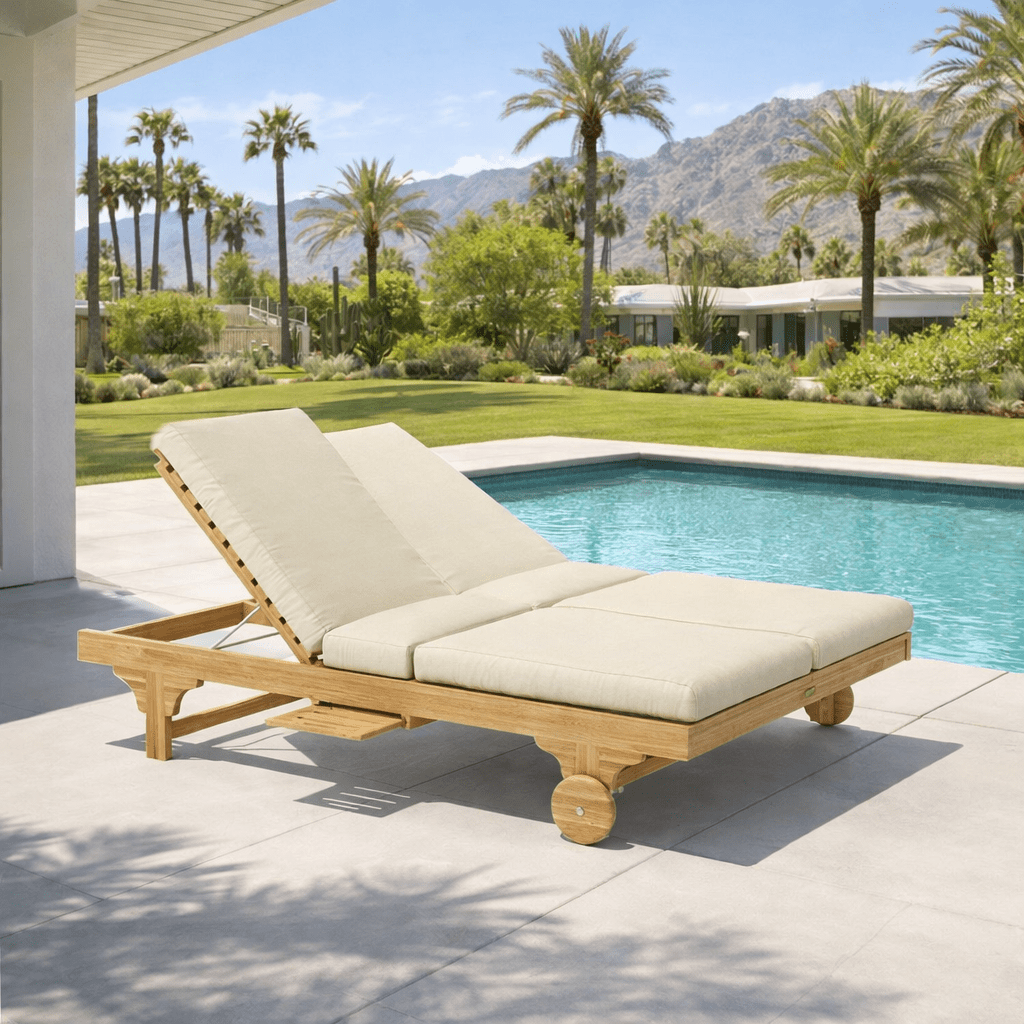 It is easy to think of the Texas coast primarily as a hot climate. That misses the harder combination: heat plus humidity, rain, repeated wet-dry cycles, and salt exposure near the water. Furniture should be evaluated against the entire environment rather than one summer temperature.
Grade A teak is valuable here because its dense grain and natural oils provide resistance to moisture, rot, insects, and warping while remaining suitable for year-round outdoor use.
A patio in an inland Houston suburb and an exposed Galveston beachfront deck should not automatically receive identical material advice. Salt-laden humid air becomes a more meaningful concern as exposure to the marine environment increases.
If your property is directly coastal, inspect hardware and other metal components periodically regardless of the primary furniture material. Natural teak reduces dependence on painted wood finishes, but no coastal homeowner should assume every component of an outdoor setting is immune to the environment.
A ten- or twelve-seat arrangement can be valuable for a household that actually entertains at that scale. It can also overwhelm a patio used by four people most of the year.
For homes that alternate between normal family use and large holiday or vacation gatherings, expandable dining and secondary seating are often smarter than making every furniture piece permanently accommodate the maximum possible guest count.
This may be the most Gulf Coast-specific planning mistake: buying furniture before deciding what happens to it during severe weather. Durability during normal rain and sun does not mean any outdoor furniture should simply be ignored during a hurricane threat.
Know which pieces can be moved, which items must be secured, and where cushions, umbrellas, small tables, and accessories will go. Consider this part of the buying decision while you still have the option to choose manageable configurations.
The teak frame and the cushion should not be managed as though they are the same material. Sunbrella cushions offer weather, UV, fade, and water resistance, but good outdoor housekeeping still matters in a humid, rainy region.
Allow wet cushions to dry, avoid trapping persistent moisture, and have a storage strategy for prolonged severe weather. This helps the upholstered part of the furniture remain as practical as the teak structure beneath it.
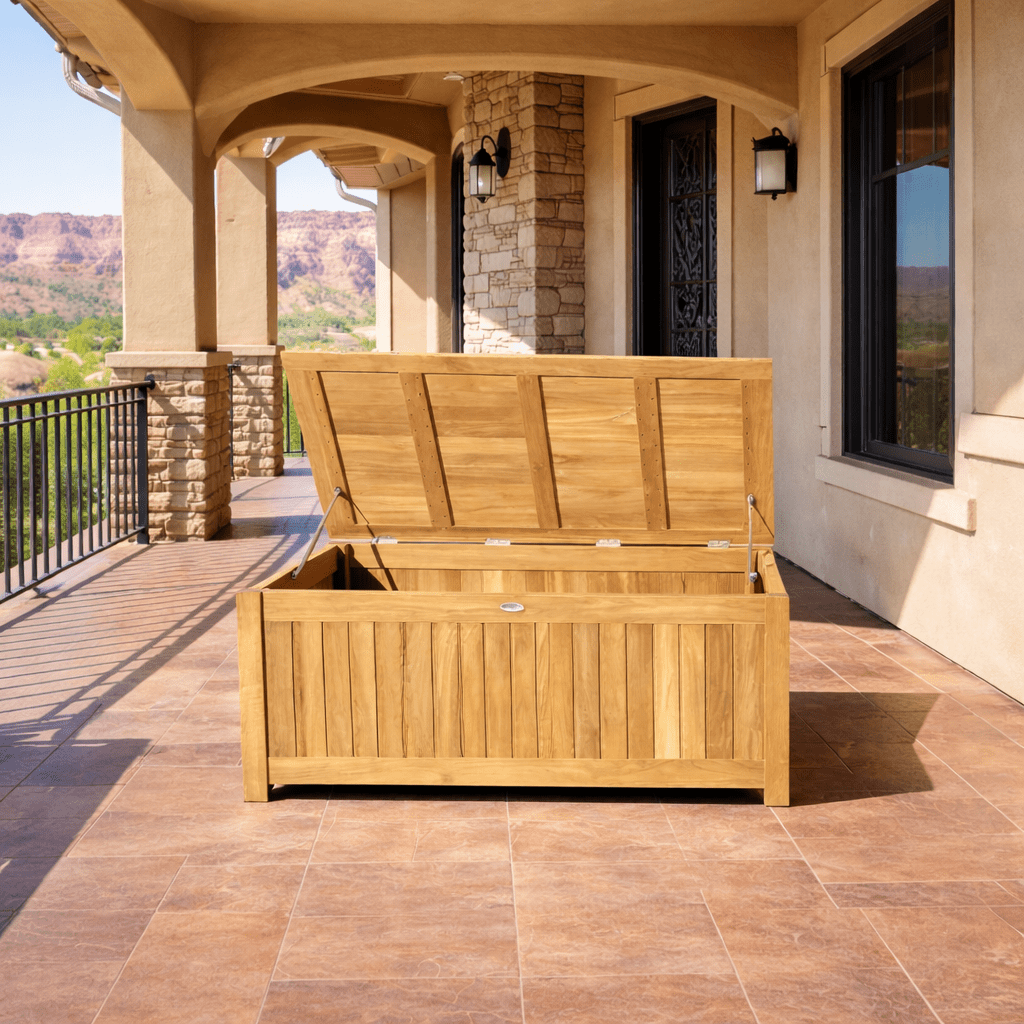 Teak does not require a complicated maintenance routine to remain durable outdoors, which is one of its major attractions for Gulf Coast properties. Care should focus on cleanliness, airflow, appearance, and sensible management of coastal exposure rather than constant refinishing.
There is no single cleaning schedule that makes sense for every Gulf Coast property. An uncovered table beneath trees, a beachfront deck, and a protected patio in League City accumulate different amounts of salt, pollen, dirt, organic debris, and moisture.
Clean when buildup becomes noticeable rather than refinishing on an arbitrary calendar. Keeping debris from sitting against the wood also allows the furniture to dry more evenly after wet weather.
For furniture in direct marine environments, occasional fresh-water rinsing can help remove salt deposits and general coastal residue. Pay attention to hardware and joints as well as broad wooden surfaces.
This is less important for a sheltered property well inland than for a home facing the Gulf, bay, or canal. Maintenance should follow actual exposure rather than the broad label “Texas Gulf Coast.”
In humid conditions, ventilation is one of the simplest useful maintenance practices. Avoid creating spaces where wet cushions, leaves, or covers trap moisture against furniture for extended periods. After heavy rain, allow cushions and surrounding areas to dry.
Protective covers are optional for teak rather than necessary for its durability. If you choose to use covers, use them sensibly and avoid creating a persistently damp enclosure beneath them.
Natural teak can be left untreated and allowed to weather to a silver-gray patina. Homeowners who prefer the original warmer teak appearance can use appropriate maintenance products to preserve that look.
The important distinction is that cosmetic maintenance and structural necessity are not the same thing. You do not need to continually stain natural Grade A teak simply to make it suitable for outdoor use.
Normal year-round outdoor exposure and hurricane preparation should remain two separate conversations. Teak is designed for outdoor use, but severe storms can turn furniture and accessories into hazards.
Follow local storm guidance and secure or relocate outdoor furnishings when conditions warrant. Umbrellas, cushions, trays, side tables, and other movable items deserve attention early because they are easier to manage before storm preparations become urgent.
The right outdoor furniture for the Texas Gulf Coast should fit both the environment and the way your home is actually used. Start with the space that matters most—dining, conversation, poolside lounging, or waterfront relaxation—then build outward with complementary pieces. Premium Grade A teak is particularly compelling for homeowners who want natural materials, long ownership, flexible maintenance, and furniture substantial enough to feel like a permanent part of a well-designed outdoor living space.
Look for materials designed for prolonged exposure to humidity, rain, strong sun, and—near the water—salty coastal air. Premium Grade A teak is a strong natural-wood option because its oils and dense grain help resist moisture, rot, insects, and warping. High-quality aluminum and synthetic materials can also be appropriate depending on construction quality, maintenance preferences, and design goals.
Prioritize furniture that tolerates moisture and outdoor exposure, then consider salt exposure, wind, storage, and storm preparation. Grade A teak is well suited to coastal settings and can be used for dining, lounge seating, and pool or deck loungers. Regardless of material, exposed coastal hardware should be inspected periodically.
Yes. Premium Grade A teak is designed for year-round outdoor use and withstands rain, sun exposure, moisture, and normal temperature fluctuations. Severe tropical weather is different: furniture should still be secured or relocated when hurricane or storm conditions require it.
No. Teak does not need to be sealed for outdoor durability. It can be left untreated and allowed to develop a natural silver-gray patina. Homeowners who prefer the original warmer teak color can choose to maintain that appearance with appropriate teak care products.
Salt-laden humid air is demanding on many outdoor materials, particularly susceptible metal components. Waterfront homeowners should consider construction materials and hardware carefully and periodically inspect exposed components. Teak is appealing because the wood itself is naturally suited to outdoor moisture exposure and does not depend on paint for durability.
Chaise loungers are useful for dedicated sun and swim areas, while a separate deep-seating group works better for conversation. Add small side tables and shade where needed rather than relying on one large furniture group to serve the entire pool deck.
Decide before purchasing where furniture, cushions, umbrellas, and accessories can be secured or relocated during severe weather. Ordinary weather resistance is not the same as hurricane protection. A manageable storm plan is an important part of furnishing any exposed Gulf Coast property.
Neither material is automatically right for every patio. Teak is heavier, warmer, natural, and has a more substantial architectural feel. Aluminum is lighter and often suits a more distinctly modern aesthetic. Coastal buyers should also consider the quality and exposure of metal components because saline, humid environments can promote corrosion.
Yes. Unfinished teak naturally weathers toward a silver-gray patina over time. That color change is normal. If you prefer the original warmer wood appearance, you can maintain it; if you like the weathered coastal look, the teak can be left untreated.
Choose for normal use first and occasional entertaining second. Six-person sets suit many households, while eight- or ten-plus-person configurations make sense for frequent large gatherings. If guest counts change significantly, an extendable teak table can provide flexibility without permanently consuming the entire patio.


