
FREE SHIPPING
within mainland USA
within mainland USA
Home ▸ Teak Outdoor Furniture ▸ By Location ▸ The Woodlands, Texas
Outdoor spaces in The Woodlands combine Southeast Texas heat and humidity with something many Houston-area patios have less of: extensive tree cover, wooded lots, and outdoor rooms integrated into mature landscaping. Furniture may face strong sun in one part of the yard, lingering shade and moisture in another, plus periods of heavy rain and stormy weather. For homeowners furnishing covered patios, pool areas, outdoor kitchens, and garden spaces, material choice matters. Premium Grade A teak is especially worth considering because it combines natural weather resistance with the substantial, architectural feel that suits these settings.

The Woodlands sits within the hot, humid environment of Southeast Texas, but the furniture decision here is more nuanced than simply buying for heat. Mature trees, preserved green space, wooded residential lots, pools, covered patios, and landscaped outdoor rooms create very different microclimates within the same property. A chair sitting beside an open pool may receive hours of sun, while furniture only thirty feet away beneath trees or a roof may stay shaded and damp much longer after rain.
High humidity matters because outdoor furniture frequently stays exposed to moisture even when it is not actually raining. Cushions dry more slowly, shaded surfaces remain damp longer, and dirt or organic material sitting on furniture can create conditions where mildew becomes more noticeable. This makes moisture resistance and easy cleaning more important than they might be in a dry climate.
It is also why we would evaluate the furniture and the cushions separately. A durable frame does not eliminate the need to manage fabric intelligently. For cushioned seating, airflow, drainage, and the ability to move or store cushions during extended wet periods deserve almost as much attention as the frame material itself.
A defining characteristic of The Woodlands is the amount of mature tree cover integrated into residential areas. That creates a useful but often overlooked planning issue: the harshest environment on your property may not be the sunniest one.
Exposed furniture has to tolerate sunlight and heat. Furniture under a canopy of trees may receive less UV exposure, but it can collect pollen, leaves, sap, and moisture while drying more slowly. When we evaluate a wooded backyard, we therefore look at each furniture zone individually instead of treating the entire yard as one climate.
Southeast Texas can receive intense rainfall during thunderstorms, and The Woodlands can experience periods of excessive rain and localized flooding. For furniture, the practical issue is less about occasional rain touching the frame and more about what happens afterward. Low spots, poor patio drainage, deep shade, and furniture placed beneath roof runoff can keep an outdoor area wetter than necessary.
Premium outdoor furniture should therefore be paired with sensible site planning. Keep pieces away from drainage paths and recurring puddles, maintain space for air movement, and avoid positioning a favorite lounge chair directly beneath a roof valley or heavy tree drip line simply because that location looks attractive on a dry day.
Leaves, pine needles, pollen, seed material, and other debris are a more meaningful maintenance consideration here than in sparse suburban landscapes. None of this means a wooded patio is difficult to furnish. It simply means furniture that can be cleaned without an elaborate refinishing routine is particularly convenient.
A useful rule for The Woodlands is to design for the patio you have after a storm or pollen-heavy week, not just the patio you see immediately after landscaping. Furniture that still makes sense under those conditions is usually the better long-term choice.
Several premium materials can work in Southeast Texas. High-quality aluminum offers a lighter, contemporary approach, while synthetic materials appeal to homeowners who want a different maintenance profile. Premium Grade A teak earns special consideration in The Woodlands because its dense grain structure and naturally high oil content make it inherently well suited to outdoor moisture, rain, sun exposure, insects, and temperature fluctuations.
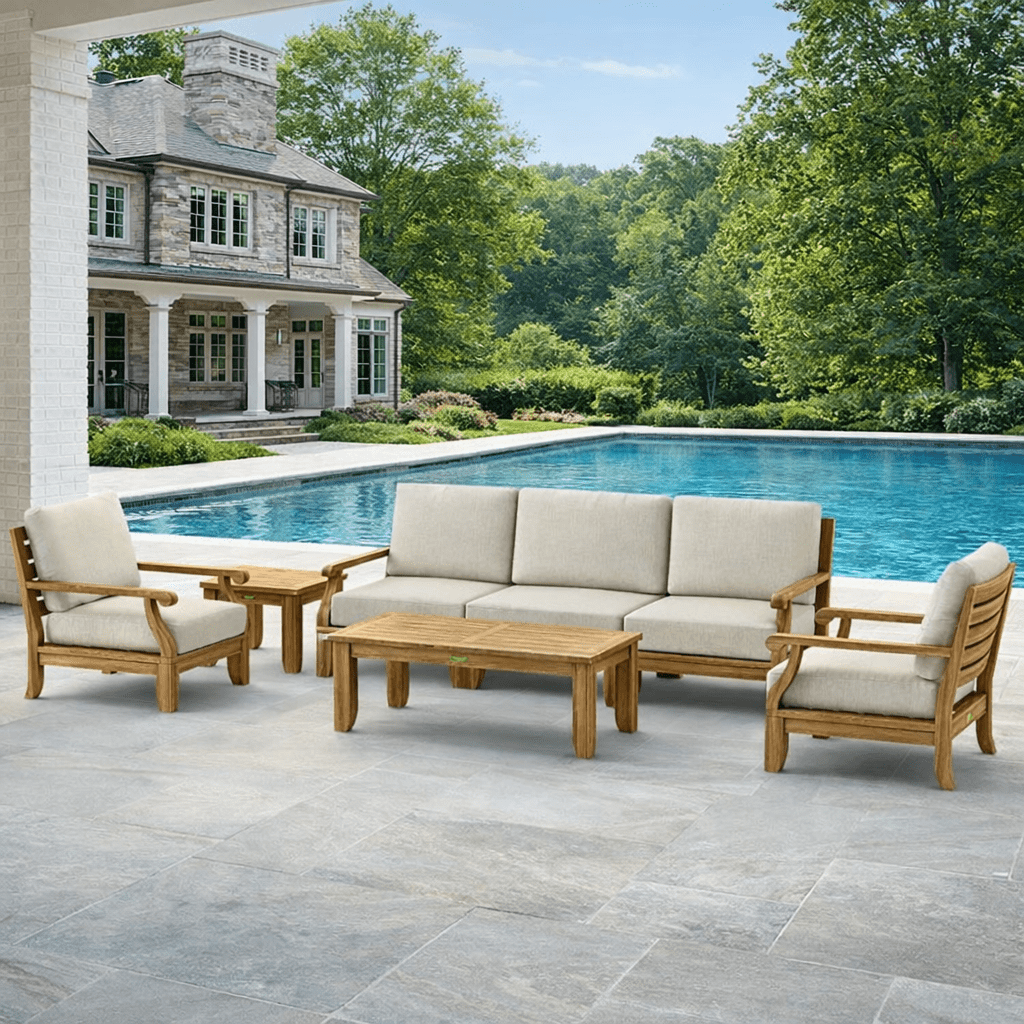 Grade A teak contains naturally high levels of oils and has a dense grain structure. Those characteristics contribute to its resistance to moisture, rotting, insects, and warping without requiring an artificial stain for durability.
That distinction matters in The Woodlands because moisture does not arrive only as direct rainfall. Humid air, shaded locations, splash around pools, and slow drying after storms all make outdoor furniture spend considerable time in a moisture-rich environment. Teak is designed for year-round outdoor use and can remain outdoors through those changing conditions.
Sun exposure does affect teak's appearance, but not in the same way many buyers initially assume. Natural teak gradually changes from its original warm golden-brown appearance toward a silver-gray patina when left untreated. That weathering is an aesthetic change rather than an indication that the wood needs paint or stain to survive outdoors.
Homeowners who prefer the newer teak color can use appropriate teak care products or sealers. Homeowners who like the softer gray appearance can allow the material to weather naturally. In a market where outdoor furniture may live outside throughout the year, that flexibility can make ownership considerably simpler.
Repeated exposure to rain, sun, humidity, and temperature changes places stress on natural materials. Grade A teak is valued in outdoor furniture partly because its density and natural properties help resist warping and provide strong structural stability.
Its heavier, sturdier character is also a good visual and practical fit for substantial outdoor rooms. Around larger patios, outdoor kitchens, and landscaped pool environments, teak tends to read more like permanent outdoor furniture and less like equipment temporarily placed on a slab.
Premium teak carries a higher upfront price than many mass-market outdoor furniture materials. The meaningful comparison is therefore not purchase price alone. Properly made Grade A teak furniture can last for decades, turning the decision into one of long-term ownership rather than repeated replacement.
For a homeowner investing heavily in the surrounding pool, patio, landscaping, kitchen, pergola, or outdoor structure, it often makes sense to evaluate furniture on the same time horizon. Furniture that visually and physically belongs in the completed space can be more sensible than repeatedly cycling through short-term pieces.
| The Woodlands Challenge | Why Premium Grade A Teak Performs Well |
|---|---|
| High humidity | Natural oils and dense grain contribute to moisture and rot resistance. |
| Heavy rainfall | Designed for year-round outdoor exposure to rain and changing weather. |
| Strong sun | Suitable for sun exposure and can weather naturally to a silver-gray patina. |
| Shaded damp areas | Moisture resistance makes teak well suited to humid, slower-drying locations. |
| Temperature fluctuations | Dense Grade A teak offers strong structural stability and resistance to warping. |
| Outdoor insects | Teak's natural properties provide resistance to insects. |
| Poolside moisture | Teak's natural moisture resistance suits outdoor areas exposed to splash and humidity. |
| Long outdoor season | Furniture is designed for year-round outdoor use rather than seasonal indoor storage. |
If we were planning a Woodlands backyard from scratch, we would begin with how the household actually moves outdoors. The most useful question is rarely “Which set looks best?” It is “What do you do outside often enough that it deserves a permanent furniture zone?” For many larger homes here, that answer involves some combination of eating, conversation, pool use, grilling, and quieter garden seating.
For a covered patio connected to the rear of the house, we would usually establish either dining or lounge seating as the anchor rather than trying to squeeze both into equal halves. If the patio sits directly outside the kitchen or outdoor cooking area, teak outdoor dining furniture often deserves priority. If the doors open from the family room and the household spends evenings outside talking or watching television, deep seating may be the stronger anchor.
That single decision creates better circulation. A common mistake on generous patios is assuming that more square footage automatically means more furniture. The best outdoor rooms still need intentional empty space between the house, cooking area, pool path, and seating groups.
The Woodlands is particularly well suited to larger outdoor dining because many single-family properties have the space to support it. We would choose the table according to the number of people who sit outside regularly, then solve occasional larger gatherings separately.
For a household of four that frequently hosts another family, six to eight seats may be more useful than a permanent ten-person table. If Thanksgiving-week guests, neighborhood dinners, or extended-family gatherings occasionally push attendance much higher, extendable teak dining tables can preserve everyday patio space while providing more capacity when it is actually needed.
A large covered patio or pool deck benefits from a distinct sitting area rather than placing every chair around the dining table. A deep-seating patio arrangement built around a sofa, loveseat, sectional, or lounge chairs gives guests somewhere to settle after dinner and makes the backyard useful even when no meal is being served.
For long patios, orienting the conversation group perpendicular to the dining area can help each zone feel intentional without erecting physical barriers. Around a pool, we generally keep the lounge group close enough to supervise activity but out of the primary circulation path between the house and water.
One advantage The Woodlands has over many newer suburban markets is the mature landscape. Do not assume every piece of furniture belongs directly against the house. A bench beneath trees, a pair of chairs facing the garden, or a small seating area near the edge of the yard can make a large property feel more connected to its setting.
This is also where teak's natural aesthetic works especially well. Its warm wood character can bridge the transition between architecture, hardscape, trees, and planting beds without requiring every outdoor zone to use exactly the same furniture configuration.
Start with the activity that defines your backyard most often. Frequent hosts should begin with dining sets or extendable tables; families who spend long evenings under a covered patio may get more value from lounge seating or sectionals; pool owners should establish dedicated chaise space rather than borrowing chairs from the dining area. Once that primary zone is solved, add complementary seating, storage, and secondary pieces around it instead of trying to furnish the entire property at once.
Outdoor living in The Woodlands is shaped by the community itself. This is a heavily landscaped, master-planned environment where homes sit among mature trees, parks, trails, golf courses, lakes, and extensive green space. Residential outdoor rooms often feel connected to that surrounding landscape rather than separated from it, which makes patios function as everyday living areas instead of occasional-use spaces.
Shade is valuable during a Texas summer, so covered outdoor rooms naturally become some of the most heavily used parts of a property. These spaces work particularly well for deep seating, dining, outdoor televisions, and conversation areas because they reduce direct solar exposure while keeping people close to the house.
The furniture strategy should account for the fact that “covered” does not mean “indoors.” Wind-driven rain, humid air, pollen, insects, and outdoor temperature swings still reach the space. Furniture designed for genuine outdoor use remains the right baseline.
A pool deck works differently from a normal patio. People move frequently between the water, loungers, shade, and house, so circulation is more important than filling every available edge. A few well-spaced chaises with accessible side tables are often more functional than a tightly packed row.
We also like creating a second shaded seating destination near the pool. That gives adults a place to converse or supervise swimmers without occupying a sun lounger for hours and makes the area useful even when nobody is swimming.
Once a backyard includes a substantial grill station or outdoor kitchen, dining becomes more than an occasional function. The table needs a logical relationship to food preparation without blocking the cook's work zone or the path back into the house.
For larger properties, we prefer separating cooking, dining, and lounging into adjacent zones. That keeps the person at the grill connected to guests while preventing an eight-person dining table from becoming the only place anyone can sit.
Large homes and patios make it tempting to buy one oversized furniture arrangement, but gatherings rarely behave that way. People divide naturally: a few remain near the grill, children drift toward the pool or yard, some guests sit at the table, and others gather around lounge seating.
That is why several coordinated furniture zones are often more useful than one enormous set. Think of capacity as distributed throughout the backyard. Twelve comfortable seats across dining, lounge, and pool areas can be more useful than twelve seats concentrated around one table.
The best configuration depends less on the size of the house than on the architecture of the outdoor space. A broad covered patio, long pool deck, wooded garden, and compact courtyard may all exist within the same market but require very different furniture.
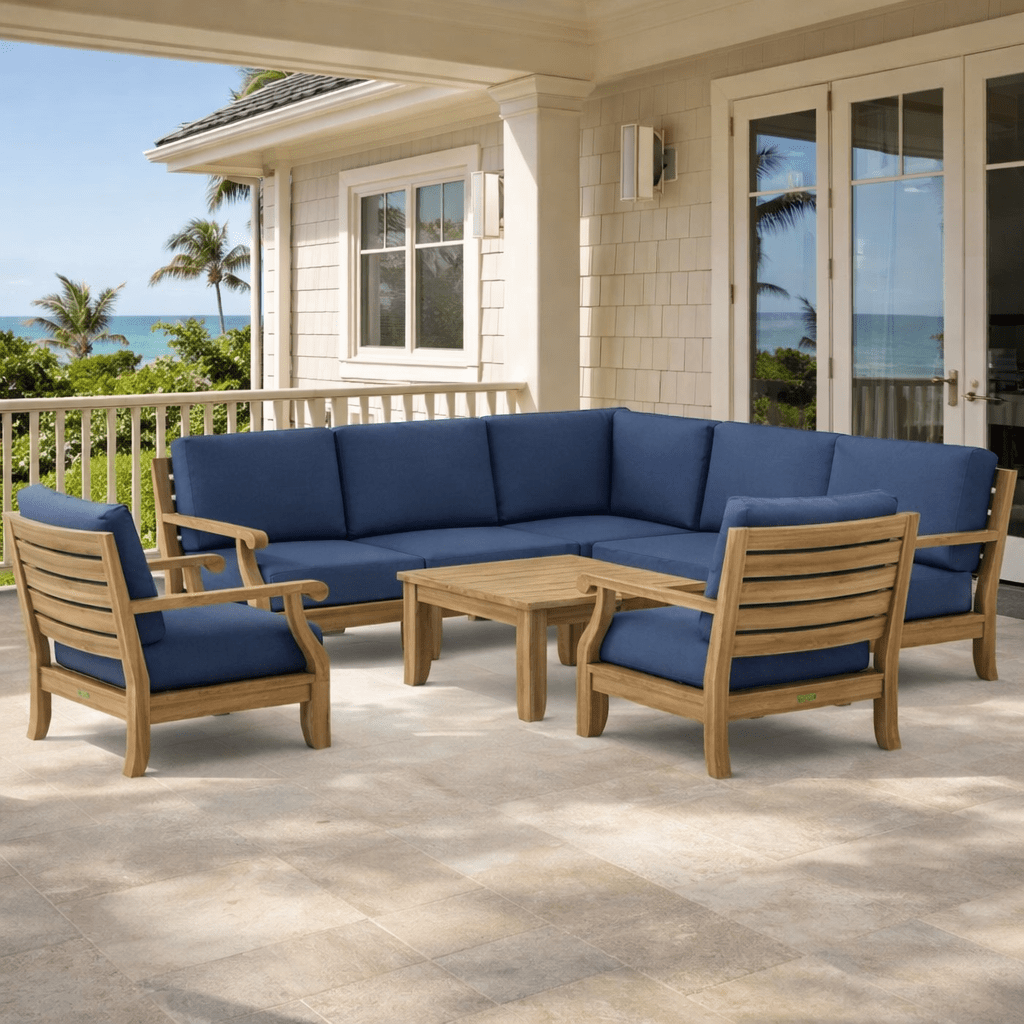 For a generous covered patio, multi-piece teak lounge sets are a flexible starting point because sofas, chairs, and tables can define a true conversation area while still allowing circulation around doors and cooking zones.
On especially broad or L-shaped patios, teak sectional seating can use corners efficiently and create a substantial gathering area. The key is to measure the traffic lane first. A sectional should frame the room, not force people to squeeze between upholstery and the pool edge every time they go outside.
Pool furniture should be chosen around how many people actually lounge at once. Four pool users do not necessarily require eight chaises. Start with the realistic everyday number, then provide other nearby seating for guests.
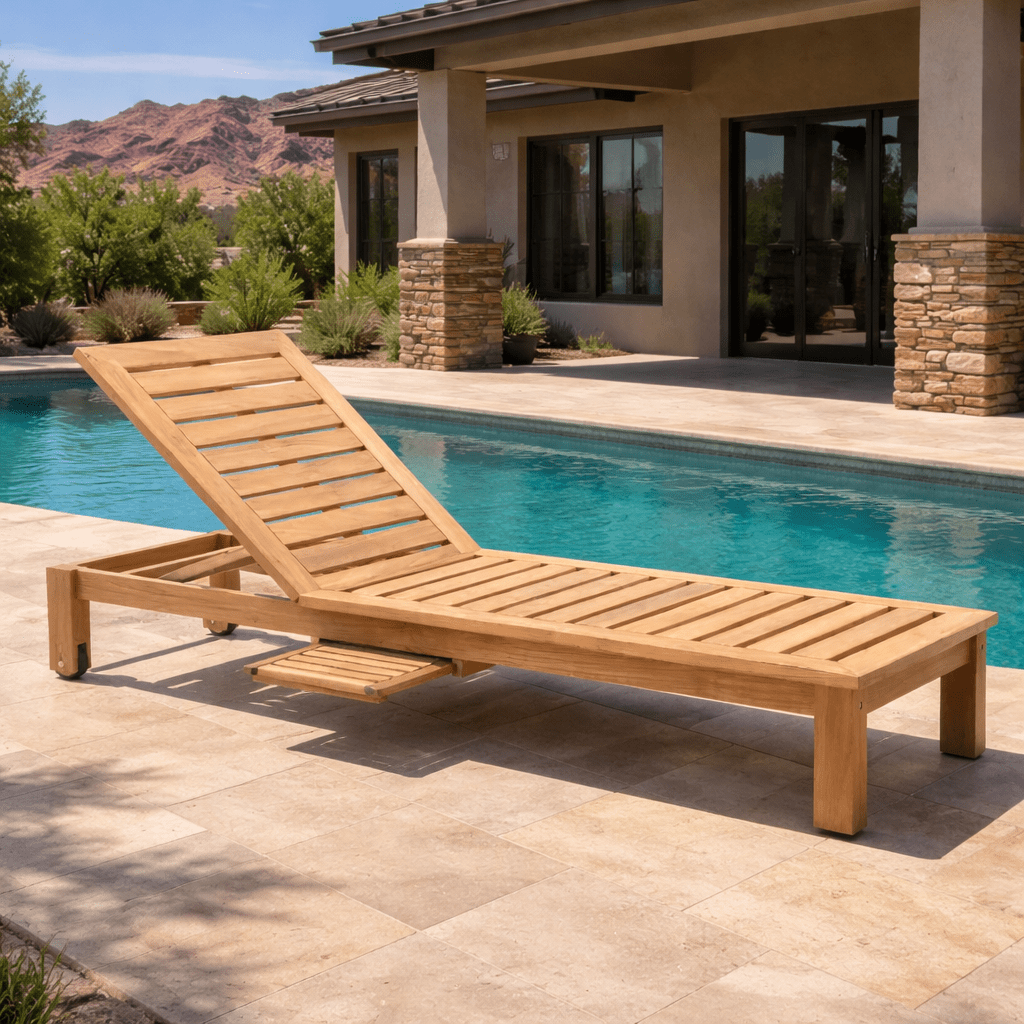
Teak chaise loungers work particularly well as a dedicated poolside category because they create a clear purpose-built zone rather than asking dining chairs or deep-seating pieces to serve multiple jobs. Leave enough room beside each lounger for access and a small table where possible.
Dining configurations of six to eight seats fit many family-oriented patios well, while larger tables make sense when hosting is a frequent part of the household routine. Round tables encourage conversation and work nicely in squarer spaces; rectangular and oval tables tend to make better use of long patios.
When dining sits beneath a pergola or covered roof, check chair clearance with every seat pulled out. The visual footprint of a table is considerably smaller than its functional footprint once people are actually using it.
A wooded property gives homeowners an opportunity that is often missed: furnish the landscape itself. A teak garden bench can provide a destination along a path, beneath a tree canopy, beside a planting area, or overlooking the quieter portion of the yard.
These secondary seats do not need cushions or a complete furniture grouping to be useful. In fact, a simple bench can feel more appropriate in a landscape setting because it gives the garden a place to pause without turning it into another formal patio.
The Woodlands was planned around the idea of integrating development with the natural environment, and that relationship remains visually important in residential design. Homes range from traditional and transitional estates to contemporary properties, golf-course homes, lake-oriented residences, and more urban multifamily settings near the Town Center and Hughes Landing.
Natural teak works especially comfortably in a wooded environment because it adds warmth without visually competing with stone, brick, landscaping, or mature trees. On traditional and transitional homes, teak can soften hardscape and masonry. Against cleaner contemporary architecture, its wood grain adds natural contrast.
That makes furniture color less about matching the house and more about balancing it. A stone-heavy patio may benefit from the warmth of newer golden teak, while weathered silver-gray teak can produce a quieter, more understated relationship with concrete, pale stone, and muted exterior finishes.
Many successful properties in this market feel better when the patio is organized as a sequence rather than a single furnished rectangle. Dining may sit beneath the main roof, lounge seating can occupy an adjacent covered bay, chaises line the open pool deck, and a bench sits farther into the landscape.
The common thread can be material rather than identical furniture. Using teak across several different categories allows the spaces to relate visually while still giving each zone the furniture configuration it actually needs.
A wooded lot, golf-course edge, lake setting, garden, or pool may create more than one attractive orientation. Before committing to furniture placement, sit in the proposed position and look outward. The wall of the house is not automatically the direction every chair should face.
Swivel chairs can be particularly useful where a covered seating area has competing focal points—for example, conversation in one direction and the pool or yard in another. This small planning detail can make a fixed outdoor room feel much more flexible.
 Homeowners naturally think about Texas sun, but deeply shaded furniture can face a different maintenance challenge: slower drying, organic debris, and prolonged moisture. Choosing outdoor furniture solely for UV performance overlooks half of the local environment.
Grade A teak is useful across both exposures because it is designed for sun, rain, humidity, and year-round outdoor conditions. The ownership routine can then be adapted to the location of each piece.
A weather-resistant material does not make poor placement irrelevant. Furniture sitting in recurring puddles, directly beneath concentrated roof runoff, or in a low area that stays wet after storms will require more cleaning and create a less pleasant outdoor space.
Teak tolerates outdoor moisture well, but good site planning is still preferable to testing any furniture unnecessarily. Observe the patio during a serious rain before finalizing permanent furniture zones.
Another common mistake is choosing furniture by table dimensions alone. Dining chairs need room to slide backward, guests need paths around occupied seats, and outdoor kitchens require working clearance.
Before buying, mark the complete occupied footprint with tape or temporary objects. On a large patio, this may reveal that you have room for both dining and lounge seating. On a narrower covered porch, it may point toward an extendable table rather than a permanently oversized one.
A high-quality outdoor frame and an outdoor cushion have different maintenance needs. Many TeakHQ lounge pieces include weather-resistant Sunbrella cushions, but outdoor fabric still benefits from sensible handling during prolonged wet weather.
Allow cushions to dry thoroughly, keep them free of organic debris, and consider protected storage when major storms or extended periods of rain are expected. The teak frame itself does not require the same storage routine.
Teak can remain outside year-round and does not require a cover for durability. A cover may still be useful for reducing pollen, leaf litter, or cleaning frequency, but that is an ownership preference rather than a requirement for the wood.
If covers are used in a humid climate, they should not become a way of trapping moisture and debris against furniture indefinitely. Clean, dry furniture before covering it and provide appropriate ventilation.
Teak care in The Woodlands is less about protecting the wood from the climate and more about keeping the furniture looking the way you want it to look. The wood can be left unfinished outdoors, so the practical maintenance schedule should respond to pollen, tree debris, shade, cushion use, and your preferred teak color.
An exposed poolside table and a bench beneath trees should not necessarily follow the same cleaning schedule. Furniture beneath dense tree cover may accumulate pollen, leaves, sap, and organic material faster even though it receives less direct sun.
Remove loose debris as needed and clean surfaces periodically rather than letting material build up for long periods. After storms or heavy pollen periods, a quick inspection is usually more useful than following an arbitrary calendar.
Humidity and shade can encourage mildew on outdoor surfaces and accumulated dirt. Keep furniture reasonably clean, maintain airflow around it, and avoid allowing wet leaves or cushions to remain pressed against the wood.
Teak's natural moisture and rot resistance gives homeowners significant flexibility, but basic housekeeping still keeps the furniture and surrounding patio looking better.
Natural teak gradually develops a silver-gray patina outdoors. Some homeowners prefer that weathered appearance because it blends naturally into wooded landscapes; others want to retain more of the original golden-brown color.
Neither choice determines whether the furniture can survive outdoors. Leaving teak untreated is a legitimate low-maintenance approach. Owners who prefer the newer color can use appropriate teak cleaners and sealers according to the product directions.
Furniture frames can remain outside year-round, but removable cushions deserve a separate plan. If the forecast calls for a prolonged period of severe weather or heavy rain, storing clean, dry cushions in a protected location can reduce unnecessary exposure and shorten the cleanup afterward.
For households with many cushions, convenience matters. If storage is cumbersome enough that nobody uses it, the system is not really a system. A nearby teak deck box or other protected storage area can make routine cushion management easier.
The Woodlands does not require the kind of routine seasonal furniture shutdown expected in colder northern climates. Teak is designed for year-round outdoor use and can tolerate temperature fluctuations.
Homeowners may still reduce cushion use during colder or wetter periods, but there is generally no need to plan on moving an entire teak dining or seating collection indoors every winter. That can be particularly valuable when the furniture itself is substantial and intended to feel permanent within the landscape.
The best outdoor furniture plan for The Woodlands balances three things: Southeast Texas weather, the way your property handles sun and shade, and the way your household actually spends time outside. Start with the primary activity—dining, conversation, poolside lounging, or entertaining—then build complementary zones around it. Premium Grade A teak is especially compelling when you want natural materials, long-term durability, flexible maintenance, and furniture substantial enough to feel at home in a thoughtfully designed outdoor space.
Look for materials designed for sustained heat, humidity, rain, UV exposure, and year-round outdoor use. Premium Grade A teak is a strong option because its natural oils and dense grain help resist moisture, rot, insects, and warping. High-quality aluminum and some premium synthetic materials can also be appropriate depending on the look and maintenance profile you prefer.
Choose outdoor-rated frames that tolerate moisture and pair them with cushions or fabrics specifically intended for outdoor use. Teak is naturally moisture resistant, while many TeakHQ lounge pieces use weather-, fade-, UV-, and water-resistant Sunbrella cushions.
Yes. TeakHQ's Grade A teak furniture is designed for year-round outdoor use and can withstand rain, sun exposure, humidity, and temperature fluctuations. Bringing the teak frame indoors for winter is not required.
No. Covers are optional rather than required for teak's durability. They may reduce pollen, leaf debris, or cleaning, but furniture should be clean and dry before it is covered for an extended period.
Prioritize materials that tolerate both weather exposure and routine cleaning. Wooded yards can expose furniture to shade, humidity, leaves, pollen, and organic debris in addition to sun and rain. Teak is particularly practical because it can remain unfinished outdoors and does not require paint or artificial stain for durability.
Start with dedicated loungers for the number of people who regularly use the pool, maintain generous circulation around the water, and add a shaded conversation area nearby. Teak chaise loungers paired with small side tables are a practical foundation.
Yes. Natural teak gradually develops a silver-gray patina when left untreated outdoors. This is normal weathering. If you prefer the original golden-brown appearance, appropriate teak care products can be used to help maintain that look.
No. Grade A teak does not need to be sealed for outdoor durability. Sealing is optional and is mainly useful for homeowners who want to retain more of teak's original color rather than allowing a natural gray patina to develop.
Size the table for your regular household and frequent guests rather than the largest gathering you can imagine. Six- to eight-person sets suit many family entertaining situations, while an extendable dining table can provide additional capacity without occupying maximum patio space every day.
Each material has tradeoffs. Aluminum is lighter and often has a more contemporary character, while poly lumber offers a synthetic, lower-maintenance approach. Teak is natural wood, heavier, warmer in appearance, and valued for longevity and an architectural feel. For homeowners prioritizing natural materials and decades of outdoor use, premium Grade A teak is especially compelling.


