
FREE SHIPPING
within mainland USA
within mainland USA
Home ▸ Teak Outdoor Furniture ▸ By Location ▸ Vail, Colorado
Outdoor spaces in Vail have to work within a distinctly alpine rhythm: abundant sunshine and comfortable summer days give way to cold temperatures, major snowfall and long periods when a deck may be buried or unused. Mountain homes also tend to make views, fireplaces, hot tubs and guest entertaining central to outdoor design. That combination favors substantial furniture that feels appropriate beside stone, timber and mountain landscapes while handling outdoor exposure well. Premium Grade A teak is particularly compelling here because it combines a warm natural appearance with proven weather resistance and flexible maintenance.

Vail asks something unusual of outdoor furniture: perform through a short but highly valued warm-weather season, then coexist with a serious mountain winter. At roughly 8,150 feet in elevation, Vail combines abundant sunshine with more than 300 inches of annual snowfall. Summer days are generally comfortable rather than brutally hot, making decks and terraces especially useful when the weather cooperates.
For a Vail homeowner, winter planning should begin before buying the furniture—not after the first major storm. The important question is not simply whether a material can get wet. Consider where furniture will sit when snow accumulates, whether cushions have a practical storage location, whether pieces will interfere with snow removal, and how easily the deck can be cleared.
This is one reason substantial outdoor furniture makes sense here. Lightweight pieces may be easy to rearrange in summer, but Vail homeowners often value furniture with a more permanent, architectural feel. Premium teak can remain outdoors year-round, although many owners will still choose to reposition pieces or protect soft goods to simplify winter management.
Vail is a snowy place, but it is also a sunny one. Outdoor furniture may spend summer afternoons on exposed decks with limited tree or roof cover, and snow can create bright winter conditions as well. Materials, finishes and fabrics should therefore be selected with sun exposure in mind rather than treating UV as a concern limited to desert or coastal climates.
Teak does not require an artificial stain for durability. If left unfinished, it naturally transitions from its original warm color toward a silver-gray patina. For lounge furniture, many TeakHQ pieces include Sunbrella cushions, whose fabric is designed to resist fading and UV exposure.
Vail does not present the persistent humidity of the Southeast or salt exposure of a coastal home. Its moisture challenge is more seasonal: snow, melting snow, summer rain and periods when surfaces cycle between wet and dry conditions. Furniture that depends on a delicate exterior finish for protection can create a more involved ownership routine.
Premium Grade A teak's dense grain and naturally high oil content make it resistant to moisture, rotting and warping. That matters in a climate where outdoor furniture may experience very different conditions from one season to the next.
One overlooked Vail consideration has little to do with furniture durability: every outdoor setup should respect the home's snow-management and wildfire-safety plan. Vail lies within a wildland-urban interface, so combustible outdoor items should not simply be treated as permanent décor wherever they happen to fit. Furniture placement should work with the property's defensible-space strategy and local requirements, particularly near the structure.
The practical lesson is simple: furnish the deck for July, but design its operating plan for January and wildfire season too. That mindset usually produces a better Vail outdoor space than choosing pieces solely from a summer photograph.
No premium outdoor material is ideal for every homeowner. Aluminum can appeal when low weight and a crisp contemporary appearance are priorities, while synthetic materials can offer very low-maintenance ownership. For Vail homes, however, Grade A teak offers a particularly useful combination: genuine natural wood, substantial construction, weather resistance and an appearance that feels at home beside stone, timber and mountain scenery.
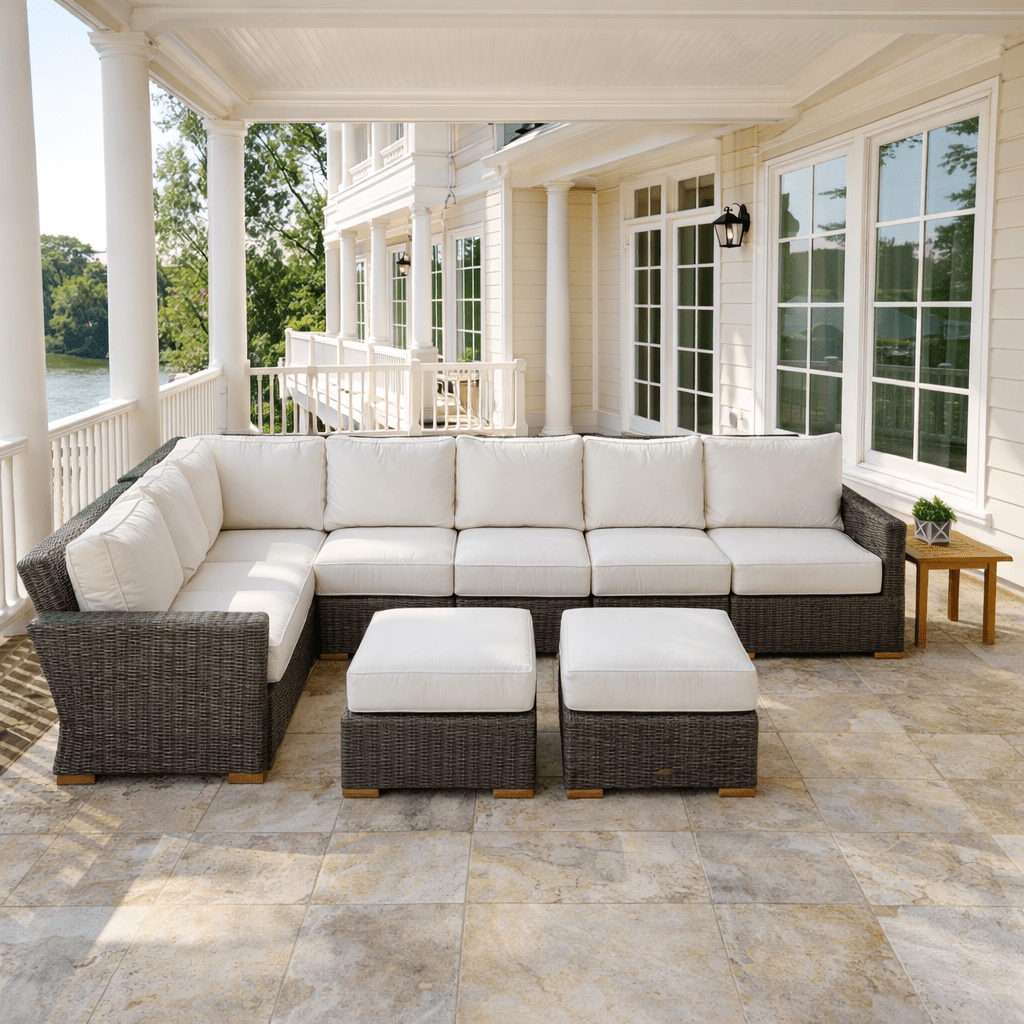 Grade A teak is naturally high in oils and has a dense grain structure. Those characteristics contribute to resistance against moisture, rot, insects and warping without requiring an artificial stain for durability. In Vail, that means the wood itself is well suited to the transition between sunny summer use, precipitation, snow and seasonal temperature changes.
This distinction matters when comparing natural woods. The useful question is not simply, “Do I want wood furniture?” but “Which wood do I want to manage outdoors for years?” Teak's inherent outdoor properties are a major reason it has long been valued for exterior furniture.
TeakHQ's Grade A teak furniture is designed for year-round outdoor use and can withstand rain, sun exposure and temperature fluctuations. That does not mean a Vail deck requires no thought during winter. Deep snow can obstruct furniture, snow removal still has to happen, and cushions are separate components with their own care needs. It means the teak frame itself does not have to be treated like indoor furniture every time the season changes.
Natural teak will weather toward silver-gray when left untreated. Some Vail homeowners appreciate that evolution because weathered teak pairs naturally with stone, weathered timber and subdued mountain palettes. Others prefer the warmer golden appearance of newer teak.
Both are legitimate choices. Teak can be allowed to age naturally, or owners can use appropriate teak care products to help maintain its original appearance. The important point is that maintaining the golden color is an aesthetic decision rather than a requirement for the wood's basic durability.
Premium outdoor furniture carries a higher initial cost, so longevity matters particularly for second homes and properties furnished to a high standard. Quality teak can last for decades rather than merely a few seasons. That can make its lifetime value more attractive for homeowners who would rather furnish a mountain terrace well once than repeatedly replace lower-grade outdoor pieces.
| Vail Challenge | Why Premium Grade A Teak Performs Well |
|---|---|
| Heavy winter snow | Designed for year-round outdoor exposure and resistant to moisture. |
| Snowmelt | Natural oils and dense grain help resist moisture and rot. |
| Strong sun exposure | Does not require artificial stain for durability; natural weathering is expected. |
| Temperature fluctuations | Dense Grade A teak is resistant to warping and suited to changing outdoor conditions. |
| Seasonal precipitation | Teak is naturally weather resistant and designed to withstand rain. |
| Long winter off-season | Frames may remain outdoors year-round, reducing the need to move substantial furniture indoors. |
We would start with how the property is actually used. A Vail Village residence with a compact terrace needs a different plan from an East Vail house with a broad deck, and a second home designed for extended-family visits needs different seating than a primary residence for two. Views matter, but circulation, snow management and where guests naturally gather matter just as much.
For many Vail homes, we would make a deep-seating conversation area the first priority. Mountain outdoor living is often less about lying in intense heat beside a pool and more about sitting outside with family or friends, taking in the view and enjoying a comfortable afternoon or cool evening.
A sofa or sectional with club chairs creates a room-like arrangement without turning every seat in the same direction. If the terrace has a dramatic mountain view, resist the temptation to line every chair along the railing. A better plan often angles seating so people can appreciate both the scenery and one another.
When space permits, we would create a separate dining zone rather than asking one furniture grouping to perform every job. A teak outdoor dining set near the kitchen makes summer breakfasts, lunches and dinners easier, while keeping the lounge area available for conversation before and after meals.
For second homes, buy for realistic peak occupancy rather than the number of people who live there most of the year. A six-person household that routinely hosts another family may get more value from an extendable teak dining table than from permanently dedicating deck space to a very large fixed table.
Cool evenings make fireside seating emotionally appealing in a mountain setting, but fire features should be selected and located only where appropriate for the property, applicable restrictions and wildfire conditions. Where permitted, a teak fire pit table can give a conversation zone a natural focal point.
We would keep the surrounding arrangement relatively simple: comfortable seating, a few useful side surfaces and enough open circulation that guests do not have to squeeze between furniture and railings.
Our most Vail-specific recommendation would be to draw two furniture plans: a summer plan and a winter plan. The summer drawing shows how people dine and gather. The winter drawing shows where the same furniture sits when snow needs to be cleared and soft goods are stored.
If the winter plan does not work, the summer plan is not finished. This one exercise can prevent buying an oversized sectional, blocking a snow-removal path or discovering that a beautiful dining set has nowhere practical to go when the deck's usable footprint changes.
Start with the activity that matters most at your property. Large mountain homes and frequently occupied second homes often benefit from lounge sets or sectionals first; dedicated entertainers may prioritize dining, while smaller terraces can begin with a compact seating group and versatile side tables. From there, add pieces that solve a specific need—extra dining capacity, fireside gathering, storage or occasional seating—rather than filling every open portion of the deck.
Vail's outdoor season has a different rhythm from a warm-weather resort market. Summer is highly usable and valuable, while winter outdoor activity tends to center more selectively around sunny terraces, hot tubs, après-ski moments and sheltered gathering spaces. For many second-home owners, the biggest demand comes when family and friends arrive together, so flexibility can matter as much as everyday capacity.
Comfortable summer temperatures make a well-designed terrace more than decorative square footage. Morning coffee, lunch after hiking, afternoon reading and dinner outdoors can all happen in the same space. That favors furniture arrangements with clearly defined uses rather than a collection of miscellaneous chairs placed around a deck.
Second homes create an unusual furnishing problem: ordinary occupancy may be modest, while holiday weekends and family trips can fill the house. Instead of sizing every piece for the largest imaginable gathering, use adaptable capacity. Extendable tables, movable dining chairs, ottomans and secondary chairs can absorb guests without making the patio feel overfurnished every other day.
As temperatures drop after sunset, outdoor time often shifts from active dining toward conversation. Deep seating works especially well when arranged around a social focal point and positioned where guests can easily move back indoors. This is one reason Vail patios often benefit from treating dining and lounging as two different activities rather than buying one oversized table to dominate the entire deck.
Winter does not make the outdoor space irrelevant; it changes how it is used. A sunny protected terrace, hot tub area or convenient seat outside a ski-oriented home may still matter, but deep snow and snow removal become operational concerns. Furniture that can remain outside simplifies the material question, while thoughtful placement solves the practical one.
Furniture selection should follow the property's actual architecture and outdoor footprint. A broad deck on a detached mountain home can support multiple outdoor “rooms,” while a condominium terrace near Vail Village or Lionshead may be better served by fewer, carefully chosen pieces.
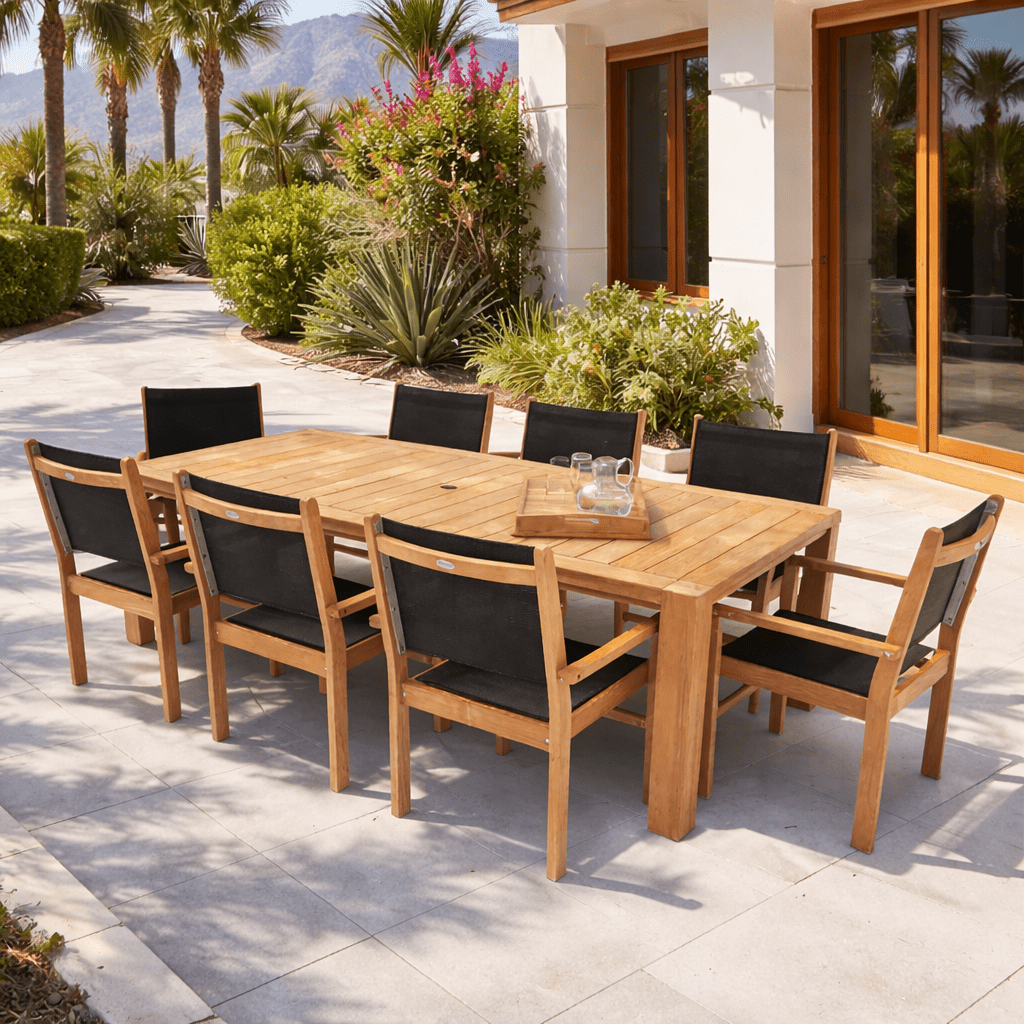 On larger decks, we would usually pair outdoor dining with a separate conversation group. An eight-person dining setup makes sense when the home regularly hosts guests, but leave enough breathing room that chairs can pull back without pinching the main circulation route.
Place lounge furniture where it benefits from both the view and convenient access to the house. A multi-piece teak lounge set can be easier to adapt than one enormous sectional when a deck has unusual angles, doors, stairs or multiple view corridors.
For smaller terraces, restraint improves both appearance and usability. A loveseat or pair of club chairs with a side table can provide a genuinely comfortable outdoor room without consuming the entire footprint. Measure door swings and walking paths before choosing furniture dimensions; mountain views are less enjoyable when every trip outside requires navigating an obstacle course.
A sectional can work exceptionally well on a generous terrace because it creates substantial guest capacity without scattering individual chairs everywhere. The best layout does not automatically face straight outward, however. L-shaped seating can preserve a major view while keeping conversation natural.
Pair larger lounge groups with teak side and end tables. Small surfaces are disproportionately useful in mountain entertaining because guests frequently arrive outside with a drink, coffee, sunglasses or another personal item that needs somewhere to land.
Not every outdoor area needs to become a full entertaining zone. A pair of Adirondack chairs on a secondary terrace or a garden bench at a landscape viewpoint can turn an otherwise unused portion of the property into a destination. These smaller seating moments are especially effective when the main deck is busy with dining and group seating.
Vail's built environment ranges from chalet-inspired and rustic mountain homes to highly contemporary residences, resort condominiums and remodeled properties that combine traditional materials with cleaner modern lines. Teak is unusually adaptable across that range because its visual character comes from real wood rather than a strongly themed decorative treatment.
Warm natural teak fits comfortably beside stone masonry, timber details and mountain landscaping without requiring the entire patio to look rustic. For a more traditional home, classic dining chairs and substantial lounge pieces can reinforce the architecture. Letting teak develop a silver-gray patina can create an increasingly understated relationship with natural surroundings.
Modern mountain homes often use large expanses of glass, simplified rooflines, metal detailing and restrained materials. In these settings, teak can provide warmth against harder architectural surfaces. Choose furniture with relatively clean lines and keep the layout disciplined rather than filling every corner with accent pieces.
A mountain view should influence furniture orientation, but it should not dictate every chair position. Think in view corridors: preserve the strongest sightline from inside the house, avoid placing unnecessarily tall furniture directly in front of important glazing, and turn some seats partially toward one another.
This produces a space that works as well when six people are talking as it does when one person is looking at the mountains.
Vail landscapes already provide considerable visual detail. Teak generally works best when it is one element in a limited palette—perhaps wood, stone, neutral performance fabric and metal accents—rather than being surrounded by numerous competing finishes. The result feels connected to the house instead of like a freestanding patio-furniture display.
 The most common conceptual mistake is choosing furniture while imagining only perfect summer weather. A layout can look excellent in July and become awkward once snow removal begins. Before purchasing, identify where furniture can remain, what may need to move and how maintenance crews will access the deck.
Grade A teak helps because the wood is designed for year-round outdoor exposure, but material durability does not eliminate the need for a sensible winter layout.
Large mountain homes can tempt owners to buy large furniture simply because the deck has enough square footage. The better question is how much usable circulation remains after people are seated. Preserve routes between interior doors, dining, lounge areas, stairs, hot tubs and railings.
Use substantial teak where it adds function, but allow open space to become part of the design.
A weather-resistant wood frame and a cushion are different ownership categories. Many TeakHQ lounge products include Sunbrella cushions, which are weather-, fade-, UV- and water-resistant, but winter snow management is still easier when soft goods have a practical storage strategy.
Do not discover in November that a house full of outdoor cushions has no designated home. Plan storage capacity when planning the furniture order.
In Vail, outdoor furniture placement should be coordinated with wildfire planning rather than considered purely decorative. Local guidance for the immediate area around structures emphasizes removing combustible items such as lawn furniture from the closest zone around buildings.
Teak's weather resistance does not make wood noncombustible. Homeowners should follow applicable local requirements and wildfire guidance when deciding where outdoor furniture is placed or stored.
Some buyers expect natural teak to remain permanently golden without maintenance. It will not: untreated teak gradually develops a silver-gray patina. Neither appearance is inherently better.
Decide which look you want before buying. Homeowners who like weathered wood can allow the process to occur naturally; those who prefer the original warmer color should expect periodic appearance-focused care.
Vail teak care is less about fighting year-round humidity and more about managing seasonal exposure, debris, snow and the owner's preferred appearance. Grade A teak does not need paint, artificial stain or sealing simply to survive outdoors, so the maintenance plan can remain relatively straightforward.
 A practical Vail routine is to inspect and clean furniture as the deck returns to regular warm-weather use. Remove accumulated dirt and organic debris rather than allowing it to remain trapped in joints or on surfaces. Additional cleaning can be done as needed through the summer, especially beneath trees or in areas exposed to landscaping debris.
TeakHQ's Grade A teak is designed for year-round outdoor use, so bringing every frame indoors for winter is not inherently required. Owners may still relocate pieces when doing so makes snow clearing easier or better suits the property's seasonal operating plan.
If furniture stays outside, do not let a protective strategy create a moisture-management problem of its own. Any cover used should fit appropriately and be managed according to its instructions rather than being treated as a substitute for occasional inspection.
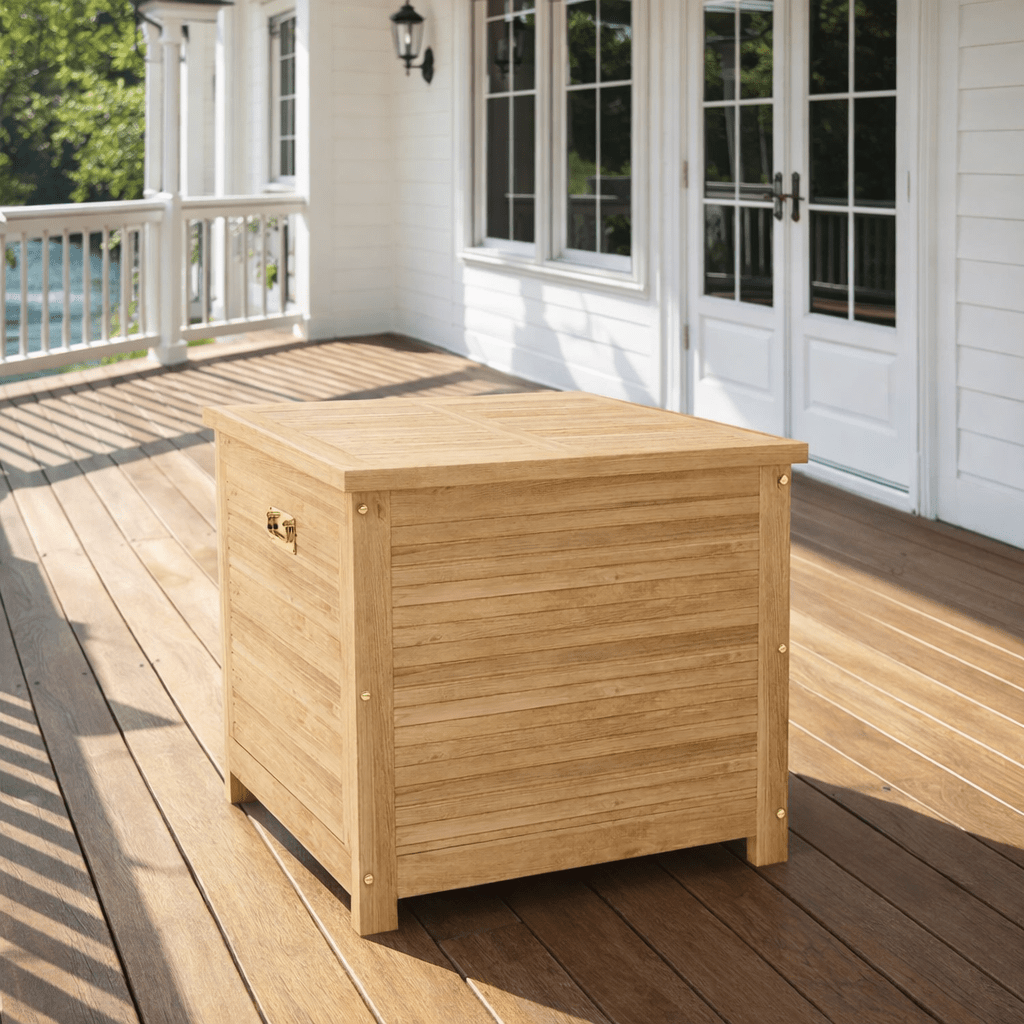
For a second home, cushion storage deserves nearly as much planning as furniture storage. A dry, practical storage location makes it much easier for owners, guests or property managers to transition the patio between seasons. A teak deck box may be useful for appropriate accessories during the active season, while long winter storage should reflect the specific cushion manufacturer's care recommendations and the storage conditions available at the property.
If you like silver-gray teak, allow the wood to weather naturally and focus your maintenance on cleanliness. If maintaining the warmer original color is important, use suitable teak care products according to their directions. Sealing or oiling is optional rather than required for basic teak durability.
For vacation homes, the natural-patina approach can be especially attractive because it separates essential maintenance from cosmetic maintenance. That makes expectations easier to communicate to property managers and avoids performing appearance work simply because it seems mandatory.
Start with the way your mountain property actually lives: how many people gather there, which views matter most, how the deck functions in winter and where dining, conversation and quiet seating naturally belong. TeakHQ's premium Grade A teak collections make it possible to build around those priorities with substantial outdoor furniture designed for long-term exterior use. Choose the primary gathering area first, then add dining, accent tables, storage and secondary seating only where each piece solves a real need.
Look for materials that tolerate sun, moisture, snow exposure and substantial seasonal temperature changes. Premium Grade A teak is a strong option because its natural oils and dense grain help resist moisture, rot and warping, while the furniture is designed for year-round outdoor use. Quality aluminum and some synthetic materials can also be reasonable choices depending on the look and ownership experience you prefer.
That depends on the material. TeakHQ's Grade A teak furniture is designed for year-round outdoor use and can withstand precipitation and temperature fluctuations. In Vail, however, furniture placement should still account for heavy snow, deck access and snow removal. Cushions and other soft goods may benefit from separate seasonal storage.
Grade A teak is naturally moisture resistant and designed for year-round outdoor exposure, including changing temperatures and precipitation. Snow itself therefore does not require teak frames to be moved indoors, although homeowners may reposition furniture to make winter deck and snow management easier.
A cover is optional rather than necessary for the teak's basic durability. Some owners use covers to reduce dirt and debris exposure, while others leave teak uncovered. If you use covers, follow the cover manufacturer's instructions and continue to inspect the furniture rather than assuming a cover eliminates all seasonal care.
Prioritize flexible guest capacity and simple seasonal management. Deep-seating sets, teak sectionals, extendable dining tables and useful side tables work well because occupancy can change dramatically between ordinary weekends and larger family visits. Plan cushion storage and winter furniture placement before finalizing the layout.
No. Premium Grade A teak does not require sealing for basic outdoor durability. You can leave it untreated and allow it to develop a silver-gray patina, or use appropriate teak care products if maintaining a warmer original appearance is important to you.
Yes. Natural unfinished teak gradually weathers to a silver-gray patina when exposed outdoors. That is a normal aesthetic change rather than an indication that the wood has failed. Owners who prefer the original golden appearance can choose an appropriate appearance-maintenance routine.
Measure more than the deck itself. Account for door swings, chair pullback, stairs, hot-tub access, important views and snow-removal routes. For larger Vail decks, separate dining and lounge zones often work better than one oversized furniture grouping. On compact terraces, fewer comfortable pieces usually outperform a crowded layout.
Both can be appropriate premium choices. Teak is heavier, warmer and more natural in appearance, which can complement stone, timber and mountain architecture particularly well. Aluminum is lighter and often has a more contemporary visual character. The better choice depends on your design goals, preferred material and how you want the space to feel.
Quality teak furniture can last for decades rather than seasons when appropriately used and cared for. That longevity is one reason the higher initial cost can make sense for a Vail primary residence or second home where owners want to avoid repeatedly replacing outdoor furniture.


