
FREE SHIPPING
within mainland USA
within mainland USA
Home ▸ Teak Outdoor Furniture ▸ By Location ▸ Westlake / Lake Travis (Texas)
Outdoor spaces around Westlake and Lake Travis have to work through intense Central Texas sun while also fitting a lifestyle built around pools, covered patios, hillside views, outdoor kitchens, and days on the lake. Larger properties often need furniture for several distinct outdoor zones rather than a single patio set. Premium Grade A teak is a particularly practical option here because it combines natural outdoor durability with the substantial, architectural look that suits both contemporary Westlake homes and relaxed Hill Country lake properties.

Westlake and Lake Travis share the broader Central Texas climate, but outdoor furniture in this part of the Austin area often faces a different ownership pattern than furniture on a compact urban patio. Many homes have substantial sun exposure, elevated terraces, pools, outdoor kitchens, lake-facing decks, or several separate outdoor rooms. Furniture is expected to remain outdoors and look appropriate beside high-investment architecture rather than simply provide occasional seating.
For most homeowners here, sun exposure deserves more attention than almost anything else. Central Texas summers routinely put outdoor furniture through prolonged heat and UV exposure, particularly on west-facing terraces and patios without mature-tree or roof coverage. That makes material selection important, but it also makes layout important: the same furniture may have a very different ownership experience beneath a covered patio than beside an exposed pool.
If we were evaluating materials independently, quality aluminum, poly lumber and premium teak could all be reasonable starting points. Aluminum is useful when a lighter, contemporary material is preferred, while poly furniture appeals to people who prioritize a synthetic, low-maintenance surface. Grade A teak is especially compelling when the homeowner wants natural wood, substantial weight, and a material intended for year-round outdoor exposure.
The summer climate can feel relentlessly dry for stretches, but outdoor furniture still needs to tolerate rain and moisture when storms arrive. That combination—strong sun followed by wet weather—is one reason indoor-style woods or decorative furniture intended mainly for protected spaces can become frustrating outdoors.
Grade A teak's dense grain and naturally high oil content make it resistant to moisture, rot and warping. For Westlake and Lake Travis homeowners, that means furniture does not need to be moved indoors every time the forecast changes. Cushions deserve separate consideration: most TeakHQ deep-seating pieces include weather-resistant Sunbrella cushions, but keeping cushions dry or allowing them to dry thoroughly after storms improves the day-to-day ownership experience.
Lake and hillside views often encourage homeowners to push furniture toward the edge of terraces, pool decks and overlooks. That is visually appealing, but the most exposed location is not always the most comfortable location at four o'clock on an August afternoon. Before buying furniture, watch where shade actually falls throughout the day and note which seating zones receive the strongest afternoon sun.
This is one of the most useful distinctions between furnishing a Westlake or Lake Travis home and simply buying a patio set: design the furniture plan around when each outdoor zone will actually be used. A west-facing view terrace might be exceptional after sunset but poorly suited to your primary lunch table. The shaded patio closer to the kitchen may deserve the larger dining investment even if it has the less dramatic view.
Lake Travis properties frequently combine recreation with entertaining. A single home may need a dining zone near the kitchen, conversation seating under cover, loungers near the pool, and smaller chairs or tables positioned toward a lake or Hill Country view. Rather than buying one oversized matching collection, it is often more useful to treat each area as its own outdoor room while maintaining a consistent material palette.
Premium teak earns its place in this market because its advantages align unusually well with how these outdoor spaces are used. It is not the only premium furniture material that can work in Central Texas, but Grade A teak offers an unusual combination of natural appearance, weather resistance, substantial construction and flexible maintenance.
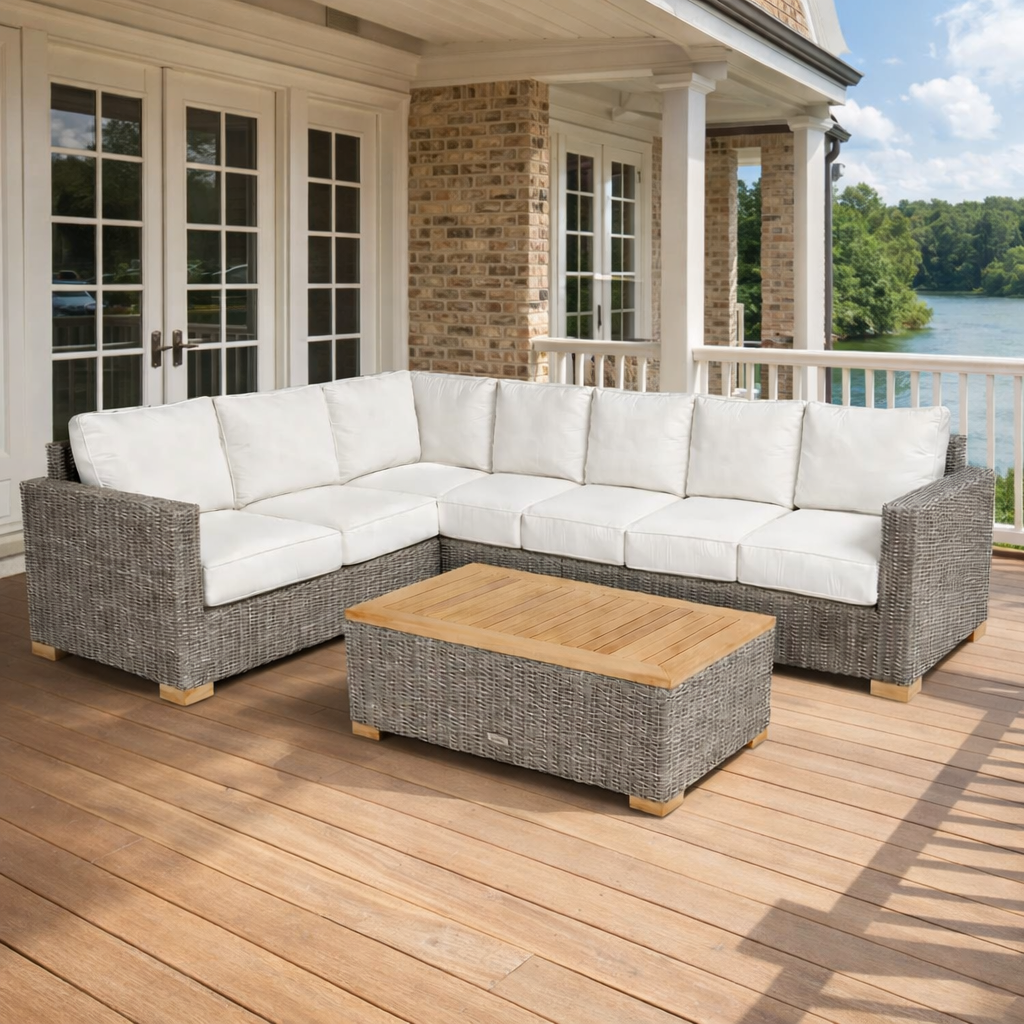 Grade A teak naturally contains high levels of oils and has a dense grain structure. Those characteristics help it resist moisture, rotting, insects and warping without requiring an artificial stain for durability. That matters on patios where furniture may move repeatedly between hot sun, rain, poolside moisture and ordinary outdoor humidity.
The practical benefit is flexibility. You are not buying a piece that must be refinished every time the Texas weather reaches it. Teak can remain outdoors year-round and can either be allowed to weather naturally or maintained for a warmer original-teak appearance.
Untreated teak naturally develops a silver-gray patina as it weathers. Some homeowners specifically prefer that softer tone around limestone, native landscaping and Hill Country architecture. Others want to preserve more of teak's original golden-brown appearance and choose to use appropriate teak care products.
That choice should be made before furnishing a large property because consistency matters. If you have a sectional beneath a roof and chaise lounges in full sun, the exposed pieces may weather visually at a different pace. Deciding whether you want natural patina or maintained color makes it easier to manage several furniture zones as one cohesive landscape.
Teak's heavier, sturdier feel is especially appealing on expansive terraces and open pool areas where lightweight furniture can feel visually undersized. Weight alone is not a substitute for securing or protecting furniture during severe weather, but substantial furniture generally feels more appropriate in the large-scale outdoor rooms common around luxury Westlake and Lake Travis homes.
The material also works across architectural styles. Natural teak can soften highly contemporary glass-and-stone homes without fighting their clean lines, while its wood character feels equally comfortable with limestone, stucco and more traditional Hill Country architecture.
Premium Grade A teak carries a higher initial cost than many outdoor furniture materials, so the better question is not simply, “Which patio set costs less today?” It is, “How many years do I expect this outdoor space to remain important to the property?” Teak furniture can last for decades, making it particularly sensible for established outdoor rooms where the homeowner would rather buy deliberately than replace furniture every few seasons.
That is also why furniture configuration deserves careful thought before purchase. A well-chosen teak sectional or dining arrangement can anchor an outdoor room for a long time. Measure traffic paths, door clearances and the actual entertaining footprint before deciding how large that anchor piece should be.
| Westlake / Lake Travis Challenge | Why Premium Grade A Teak Performs Well |
|---|---|
| Intense summer sun | Designed for outdoor sun exposure and can weather naturally to a silver-gray patina. |
| Heat followed by rain | Natural oils and dense grain provide strong moisture and weather resistance. |
| Poolside moisture | Teak resists moisture and does not require artificial stain for outdoor durability. |
| Seasonal temperature changes | Grade A teak withstands temperature fluctuations and resists warping. |
| Year-round exposure | Designed to remain outdoors throughout the year. |
| Insects and organic environments | Teak is naturally resistant to insects and rot. |
| Long ownership horizons | Quality teak can last for decades with flexible maintenance. |
If we were walking a Westlake or Lake Travis property with you, we would not begin by choosing a furniture collection. We would begin by identifying the three or four places where people naturally spend time: where food comes out of the house, where guests gather before and after dinner, where swimmers want to relax, and where the best view is enjoyed at a comfortable time of day.
For a household that hosts dinners, extended family or neighborhood gatherings, we would usually establish the dining area first. A six- or eight-person table may be sufficient for everyday family use, while frequent hosts should consider an extendable teak dining table rather than permanently filling the patio with a table sized for the largest possible gathering.
That is an important planning distinction. Bigger is not automatically better, even on a large property. An extendable table preserves circulation and visual openness most of the time while providing extra capacity when guests arrive.
Next, we would establish a true lounge zone rather than scattering individual chairs around the patio. On a large covered terrace, a sectional with a coffee table can create the same conversational focus that a living room has indoors. On a narrower deck or irregular hillside terrace, a sofa with club or swivel chairs may provide greater flexibility.
For spaces oriented toward changing views—a lake on one side and an outdoor television or fireplace on another—teak swivel chairs can be particularly useful because people can redirect themselves without continually repositioning furniture.
If the property has a pool, treat it as a separate activity zone. Chaise lounges belong where swimmers can move between water and seating without crossing the dining area. Allow walking space behind and beside each chaise; four properly spaced loungers generally look and function better than squeezing in six simply because the deck technically has enough square footage.
A nearby side table for each one or two loungers also matters more than homeowners expect. Phones, drinks, towels and sunscreen otherwise migrate to the ground or onto dining surfaces.
The most memorable seat on the property does not necessarily need to be the largest furniture group. A pair of lounge chairs, swivel chairs or Adirondack-style seating facing the lake can create a destination without obstructing the view with a full sectional. In elevated Westlake properties, the same idea works for Hill Country or downtown-facing terraces.
Think of view seating as a supplement to the main entertaining area rather than automatically making it the primary furniture zone. The best view and the best place to host eight people are often two different locations.
Begin with the collection that supports the activity your household does most often. Frequent hosts should usually compare teak outdoor dining furniture and deep seating first; pool-centered homes may get more daily value from loungers and conversation seating. For larger Westlake and Lake Travis properties, the strongest plan is often a combination of two or three complementary zones rather than one enormous matching set.
Outdoor living here often functions less like an occasional backyard activity and more like an extension of the house. Lakeway's lake-oriented lifestyle, Westlake's substantial residential properties, the broader Hill Country setting, and the region's long warm season all encourage homes with multiple outdoor uses—from morning coffee and pool afternoons to large evening gatherings.
Homes with a grill station or full outdoor kitchen need furniture planned around service flow. Keep the primary dining table close enough that food does not travel across the entire patio, but avoid placing chairs directly in the cooking circulation path. If people routinely congregate around the kitchen, counter-height seating can create an informal second zone without interfering with the main table.
For frequent hosts, the dining table should solve everyday needs first and occasional large gatherings second. This is where expandable dining furniture makes more sense than permanently dedicating a large portion of the patio to twelve seats.
Poolside living is not one activity. Some people want to recline in the sun; others want shaded conversation seating where they can remain part of the group without sitting beside the water. Good pool areas provide both.
A row of teak chaise loungers can define the water-facing zone, while a sectional, sofa or pair of club chairs under a covered patio creates the cooler retreat. Keeping those functions separate also reduces wet traffic through the main lounge area.
Lake Travis homes frequently need to handle occupancy differently on a quiet weekday than on a weekend with visiting family and friends. Furniture that works only at one extreme can become inconvenient. Flexible chairs, extendable tables, ottomans that can provide occasional seating, and several smaller conversation clusters often adapt better than one oversized fixed arrangement.
This is particularly useful for second homes, where the outdoor area may sit relatively quiet at times and then become the social center of the property when guests arrive.
During the hottest part of summer, some of the most enjoyable outdoor time comes later in the day. A conversation group positioned for shade and evening views may receive more use than furniture selected purely for its daytime appearance.
For fall, winter and early-spring gatherings, a teak fire pit table can make the conversation area more useful without turning it into a separate destination elsewhere in the yard.
 The right furniture depends less on the ZIP code than on the outdoor room. A West Lake Hills estate with a covered terrace, a Lakeway pool home, and a waterfront property on Lake Travis may share the same climate but need very different configurations.
For the principal covered patio, we would usually favor multi-piece teak lounge seating or a sectional built around a coffee table. The goal is to make this area comfortable enough that guests remain outdoors after dinner rather than immediately returning inside.
Deep seating works especially well when the covered patio includes an outdoor television, fireplace or kitchen. A sofa-and-chairs arrangement feels more open and adjustable; a sectional provides more continuous seating and can make a large architectural space feel intentional rather than empty.
For households that routinely entertain six to ten people, a substantial dining set is one of the most useful investments on the property. Rectangular or oval tables usually organize larger groups efficiently, while round tables can encourage easier conversation when the available space supports their diameter.
Leave enough clearance around the table for guests to pull chairs back while someone else walks behind them. This sounds elementary, but it is one of the most common reasons an expensive outdoor dining area feels crowded after installation.
At the pool, prioritize circulation and small-scale convenience. Chaise lounges should face the water or preferred view without blocking the natural route between the house and pool. Then add appropriately placed teak side tables rather than expecting one central table to serve an entire row of loungers.
If the pool deck is large enough for conversation seating, place that group slightly away from the wettest traffic. This allows people in normal clothes to share the pool environment without feeling as though they are sitting in the splash zone.
For terraces where the view is the primary attraction, resist filling every available foot. Two or four comfortable chairs with a small table may preserve the openness better than a large set. Swivel seating can be particularly useful where guests alternate between conversation and facing the lake.
On sprawling properties, repeated materials can connect separate spaces without making everything identical. Natural teak dining furniture near the house, teak loungers by the pool and a smaller teak seating group at the view point create continuity while allowing each zone to function differently.
Westlake and Lake Travis outdoor spaces often bring together contemporary Austin design and more traditional Texas Hill Country materials. Limestone, stucco, glass, steel, native stone, mature trees and drought-conscious landscaping can all appear within the same broad market. Teak works well in that mix because its visual character is natural without forcing the space toward either rustic or coastal styling.
On a clean-lined contemporary home, we would keep the furniture layout disciplined. A teak sectional or rectilinear dining table adds warmth against stone, glass and darker architectural finishes without requiring decorative complexity. Fewer, better-scaled pieces usually complement this architecture more successfully than numerous small furniture items.
Natural teak is equally comfortable beside limestone, native plantings and warmer Hill Country palettes. The key is to avoid turning “natural” into overly rustic. Simple teak profiles allow the wood itself to provide warmth while the architecture and landscape remain dominant.
Lake-oriented properties can support a more relaxed layout: deep seating, loungers, swivel chairs and multiple small tables make it easy for guests to move between activities. Teak's natural appearance also avoids making a lake house feel like a commercial resort even when the backyard includes a substantial pool and entertainment area.
A common design error on scenic properties is arranging every chair inward because that is how indoor living rooms work. Outdoors, one side of the “room” may be the reason the space exists. On a Lake Travis overlook or elevated Westlake terrace, orient at least some seating toward the landscape and use swivel or movable companion chairs to keep conversation flexible.
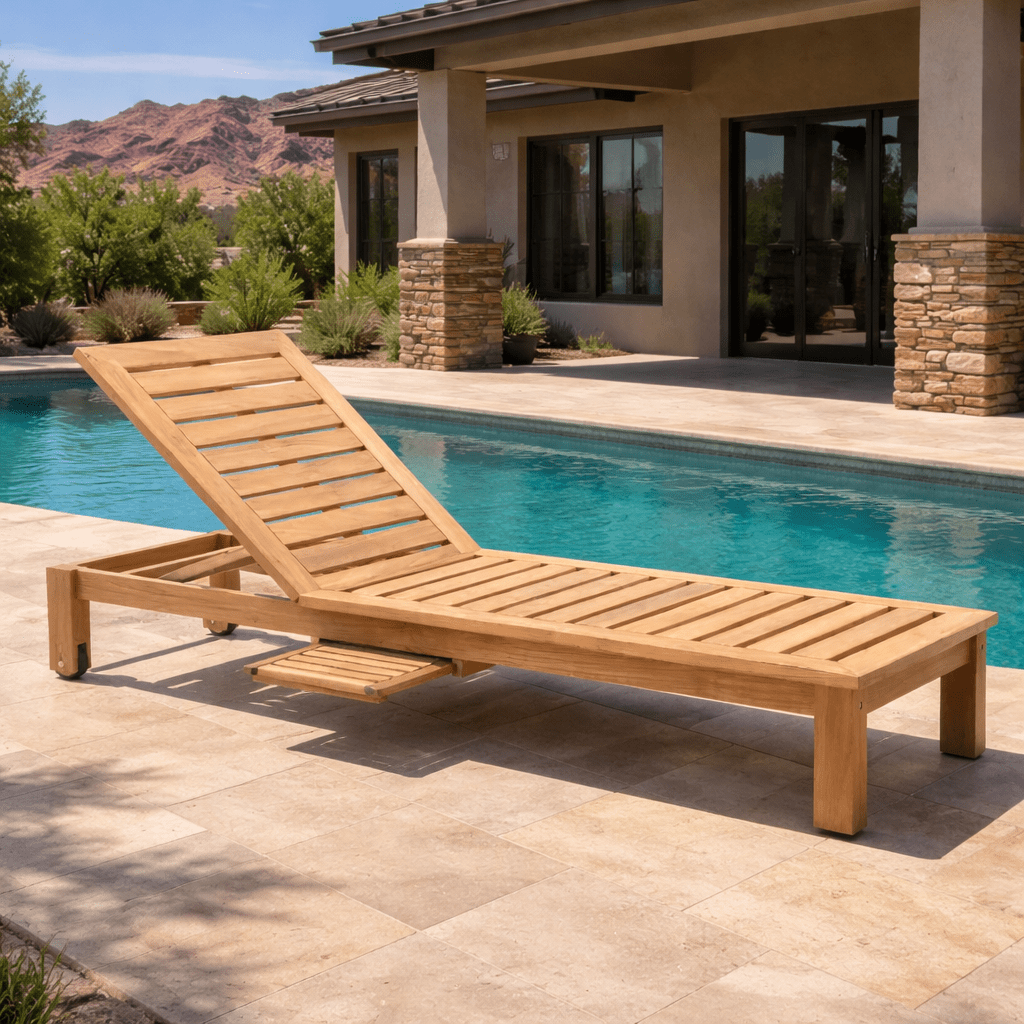 A large patio does not need to be filled. Buying a twelve-person table because twelve people occasionally visit can make everyday outdoor living less comfortable. Furnish for normal use first, then use extendable tables or supplemental chairs when the guest count grows.
Teak's availability across individual pieces and coordinated sets makes it easier to build capacity deliberately rather than purchasing one oversized all-purpose arrangement.
A beautiful west-facing terrace may be a wonderful evening setting and a poor mid-afternoon lounge area. Before choosing the primary furniture location, observe the property during the hours you actually expect to use it.
Teak is designed to withstand outdoor sun exposure, but material durability does not eliminate human comfort. Furniture selection and shade planning are two separate decisions; solve both.
On larger Westlake and Lake Travis properties, trying to make one seating group perform every function often produces a space that looks impressive but works poorly. Dining, wet pool traffic, cooking and relaxed conversation have different circulation requirements.
Use teak as a consistent material across several zones rather than assuming every item has to belong to one enormous matching set.
Homeowners often invest heavily in the primary sofa, sectional or loungers and under-plan the small surfaces people use constantly. A chair without a nearby place for a drink or phone becomes less comfortable in practice.
Side tables, coffee tables and occasional tables are particularly important around pools and larger conversation groups. They make the space work without materially increasing its visual weight.
The teak frame and the cushion are different materials with different care needs. Grade A teak can remain outdoors year-round, while cushions benefit from sensible handling during prolonged wet periods and severe weather.
Many TeakHQ lounge pieces include Sunbrella cushions, which are weather-, fade-, UV- and water-resistant. Even so, water resistant does not mean that keeping soft goods continuously saturated is desirable. Allow wet cushions to dry thoroughly and store or protect them when extended non-use makes that practical.
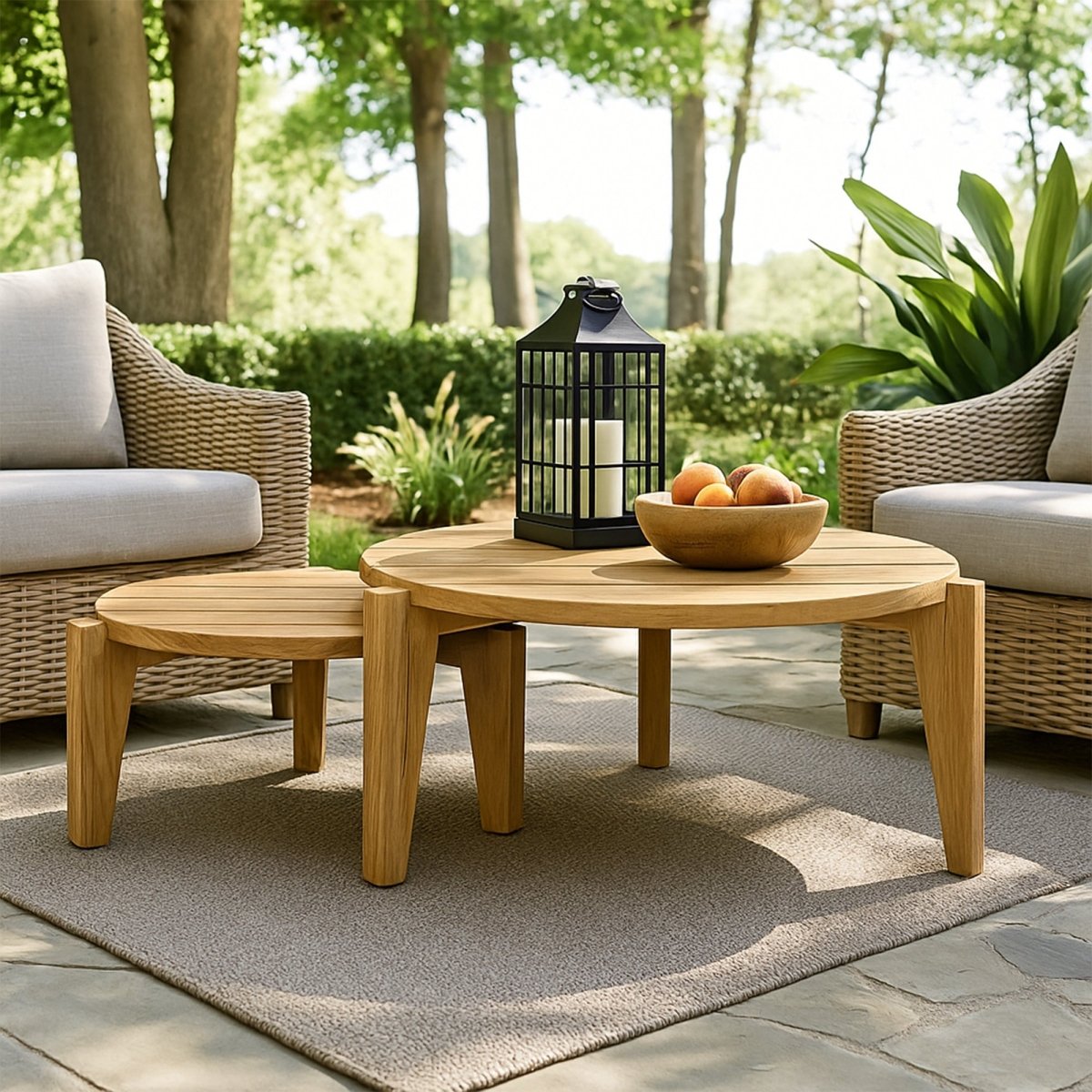 One of teak's advantages in Central Texas is that maintenance can be matched to the appearance you want. Outdoor durability does not depend on maintaining a freshly finished look, so homeowners can choose between allowing natural weathering and maintaining more of teak's original color.
There is no useful universal cleaning calendar for every property. A covered Westlake patio beneath a roof may need attention less often than furniture under trees near the lake or beside a busy pool. Clean when pollen, dust, leaves, spills or organic debris begin to accumulate rather than maintaining furniture simply because a date appears on the calendar.
Pay particular attention to horizontal surfaces and joints where debris can remain wet after rain. Routine cleaning is easier than allowing layers of grime or organic matter to build up.
Untreated teak will gradually weather toward silver-gray. That is a normal characteristic of teak, not an indication that the wood has lost its outdoor durability. If you like the patina, the simplest approach is to let it develop and clean the furniture as needed.
If you prefer the warmer original teak color, appropriate care products can help maintain that appearance. Make the choice based on aesthetics rather than assuming sealing is required for the furniture to survive outdoors.
Covered patios and shaded areas reduce direct sun but can allow surfaces and soft goods to dry more slowly after rain. Keep leaves and debris from accumulating beneath cushions or around furniture, and allow damp cushions to air out rather than leaving moisture trapped against them.
Furniture near pools should also be rinsed or cleaned when normal pool use leaves visible residue. Teak is moisture resistant, but keeping any premium outdoor furniture clean remains good ownership practice.
Teak's substantial weight is useful in everyday outdoor settings, but no furniture material should be treated as storm-proof. When severe weather is expected, follow appropriate local precautions for loose objects, cushions, umbrellas and other outdoor accessories.
Protective covers are optional for teak rather than a basic durability requirement. Homeowners may still use them to reduce dirt, debris and cleaning, particularly on second homes or furniture that will sit unused for extended periods. If covering furniture, avoid trapping prolonged moisture underneath.
The best outdoor furniture plan for Westlake or Lake Travis is not necessarily the one with the most pieces. Start with the places your household genuinely uses—the dining table nearest the kitchen, the shaded conversation area, the pool, or the view—and furnish those zones exceptionally well.
Premium Grade A teak is especially well suited to that long-term approach. Explore TeakHQ's teak patio seating, dining furniture, loungers and accent tables to build an outdoor space around your property rather than forcing your property around a predetermined furniture set.
Premium teak, quality aluminum and poly lumber can all be practical outdoor materials. Grade A teak is particularly attractive for Lake Travis homeowners who want real wood, substantial furniture and natural resistance to moisture, sun, rot, insects and warping. The best choice ultimately depends on your preferred appearance, weight and maintenance approach.
Yes. TeakHQ's Grade A teak furniture is designed for year-round outdoor use and withstands rain, sun exposure and temperature fluctuations. Covers are optional rather than required for the teak itself.
Start with dedicated chaise loungers for swimmers, then create a separate shaded conversation zone with a sectional, sofa or club chairs. Small side tables are useful between loungers so drinks, phones and towels do not end up on the ground. Browse teak loungers and deck chairs for pool-oriented configurations.
No. Teak does not require sealing or artificial stain for outdoor durability. Untreated teak naturally develops a silver-gray patina. Owners who prefer its original warmer color can choose to use suitable teak care products for appearance.
The furniture material and human comfort should be evaluated separately. Grade A teak is intended for sun exposure, but a west-facing patio can still be uncomfortable during the hottest afternoon hours. Consider roof cover, umbrellas or another shade strategy, and place your primary daytime seating where the property provides usable shade.
For many Westlake and Lake Travis properties, several defined zones work better. Keep dining near the kitchen, conversation seating in a comfortable shaded area, loungers near the pool, and smaller seating at important views. Repeating teak across those areas can create visual continuity without forcing every space to perform the same job.
Size the table for your normal household and regular guests rather than the largest gathering you host all year. If your guest count changes significantly, an extendable teak table provides additional capacity without permanently crowding the patio.
Quality teak furniture can last for decades. That longevity is one reason Grade A teak is generally approached as a long-term outdoor investment rather than a furniture set intended to last only a few seasons.
Remove pollen, leaves, dirt and other debris as needed and clean the furniture when buildup becomes visible. Teak may be left untreated to develop a silver-gray patina or maintained for a warmer original-teak appearance. Furniture under trees or in damp shade may need more frequent cleaning than furniture on an open, covered terrace.
Not for every buyer. Aluminum is lighter and often suits highly modern spaces, while poly lumber offers a synthetic, low-maintenance approach. Teak provides real natural wood, a warmer appearance and a heavier, more architectural feel. For homeowners who prioritize natural materials and long-term outdoor use, premium Grade A teak is often the stronger fit.


