
FREE SHIPPING
within mainland USA
within mainland USA
Home ▸ Teak Outdoor Furniture ▸ By Location ▸ Wilmington, North Carolina
Wilmington homeowners furnish outdoor spaces in a demanding but highly rewarding environment: humid summers, frequent rain, strong sun, coastal air and occasional tropical weather all matter when choosing furniture for decks, porches and patios. Waterfront and beach-area properties add even more exposure, while screened porches and covered outdoor rooms create opportunities for comfortable living well beyond midsummer. Premium Grade A teak is a particularly strong option here because it combines natural weather resistance with the substantial, architectural look that suits both historic Wilmington homes and relaxed coastal properties.

Wilmington is not simply a warm-weather furniture market. It is a coastal environment where moisture, periods of intense sun, wind-driven rain and the possibility of tropical weather all influence what works outdoors. A patio several miles inland may have a very different exposure profile from a deck near Wrightsville Beach or a home along the Intracoastal Waterway, so the first step is understanding exactly where and how your furniture will live.
Humidity matters because outdoor furniture often remains damp longer after a shower, especially on shaded porches or beneath trees. The issue is not simply whether furniture can get wet. It is whether the material tolerates repeated wet-and-dry cycles without requiring constant refinishing or becoming difficult to live with.
This is one reason material choice matters more here than it might in a dry inland climate. Premium outdoor materials such as high-quality aluminum, synthetic poly furniture and Grade A teak can all make sense, but they create different ownership experiences. Aluminum is light and contemporary. Poly products reduce wood-care concerns. Teak offers a natural material with substantial weight, warm appearance and the ability to remain outdoors without an artificial protective finish.
A downtown courtyard, a Landfall patio and a Wrightsville Beach deck should not automatically receive the same furniture plan. The closer a property is to the ocean, sound or open water, the more attention we would pay to salt exposure, wind and the practicality of securing loose outdoor items before storms.
This distinction is easy to miss. Homeowners sometimes shop according to the city's general climate when they should really shop according to the micro-location of the furniture. An open upper deck facing the water is a harsher furniture environment than a screened porch only a few miles away.
Furniture should be arranged so water can drain and surfaces can dry rather than remaining trapped against walls, rugs or dense landscaping. On uncovered patios, we would pay particular attention to cushion management and to whether tables, chairs and lounge pieces can remain outdoors without becoming a maintenance project after every wet spell.
Premium Grade A teak is useful in this setting because it is naturally resistant to moisture, rot and warping. That does not mean homeowners should ignore cleaning or drainage; it means the wood itself does not depend on paint or an artificial stain for outdoor durability.
In Wilmington, storm preparation should be considered when choosing a layout rather than improvised after the furniture arrives. Heavier furniture can feel substantial and stable during ordinary use, but severe-weather preparation is still necessary. Cushions, umbrellas and other loose accessories should have a realistic storage plan, and no outdoor furniture should be treated as hurricane-proof.
A useful rule is to ask where every movable outdoor item will go before buying it. That is especially important for larger waterfront properties where a beautiful outdoor room may contain several lounge chairs, dining chairs, cushions and accessories.
Premium Grade A teak earns its place in coastal North Carolina because several of its natural characteristics address the conditions homeowners encounter here. Its value is not that it eliminates weather or maintenance; it is that the wood is naturally equipped for outdoor exposure without relying on a painted or stained protective surface.
 Grade A teak has naturally high oil content and a dense grain structure. Those qualities contribute to its resistance to moisture, rotting, insects and warping. In Wilmington, where furniture may experience humid air, afternoon rain and long stretches outdoors, that gives teak an important practical advantage over many less durable woods.
Teak can therefore remain outside year-round without requiring an artificial stain for durability. Owners can still clean, seal or oil it for appearance if they prefer, but those treatments are choices rather than prerequisites for the wood to function outdoors.
Outdoor teak gradually weathers from its original golden-brown color toward a silver-gray patina when left untreated. For coastal homes, that can be an advantage because the aged appearance often complements weathered shingles, pale siding, natural stone, coastal landscaping and neutral outdoor fabrics.
Homeowners who prefer the warmer original color can use appropriate teak-care products instead. The important distinction is that color maintenance and structural durability are separate decisions. You do not need to keep teak looking freshly golden simply to make it suitable for outdoor use.
Teak furniture generally has a heavier, more architectural feel than lightweight alternatives. That is especially appealing on larger covered porches, pool patios and waterfront terraces where undersized or very light furniture can visually disappear against a substantial home.
The weight should not be confused with a claim that furniture can remain unsecured during tropical storms. Severe weather changes the rules. But during normal daily use, many homeowners appreciate furniture that feels planted rather than temporary.
Grade A teak costs more upfront than many mass-market patio materials, so it makes the most sense for homeowners planning around years of use rather than a short replacement cycle. Properly made teak outdoor furniture can last for decades. That makes it especially relevant for primary residences, long-held vacation homes and carefully designed outdoor spaces where owners would rather furnish once with a durable natural material.
For Wilmington buyers comparing materials, we would evaluate lifetime ownership rather than price alone: purchase cost, expected replacement cycle, finish maintenance, appearance over time and whether the furniture still fits the property as the landscape and home evolve.
| Wilmington Challenge | Why Premium Grade A Teak Performs Well |
|---|---|
| Humidity | Natural oils and dense grain help resist moisture-related deterioration. |
| Frequent rain | Teak is designed for outdoor exposure and does not require paint for durability. |
| Coastal moisture | Teak naturally resists rot and can remain outdoors year-round. |
| Strong sun | Untreated teak weathers naturally to a silver-gray patina rather than requiring a stained finish. |
| Temperature changes | Grade A teak is resistant to warping and handles normal outdoor temperature fluctuations well. |
| Long outdoor season | Durability and maintenance flexibility make teak practical for heavily used outdoor rooms. |
| Storm preparation | Substantial construction is useful in daily life, while severe storms still require sensible preparation. |
We would start with the architecture and actual traffic pattern, not with a catalog. Wilmington homes range from historic properties with prominent porches to newer coastal houses with screened outdoor rooms, pools and large rear patios. The right plan usually comes from deciding which outdoor activity deserves the best location and then furnishing outward from there.
If a home has both an uncovered patio and a screened or covered porch, we would usually put the furniture used most often in the sheltered zone. Deep seating performs especially well there because the space can function almost like another living room while receiving protection from direct afternoon sun and sudden showers.
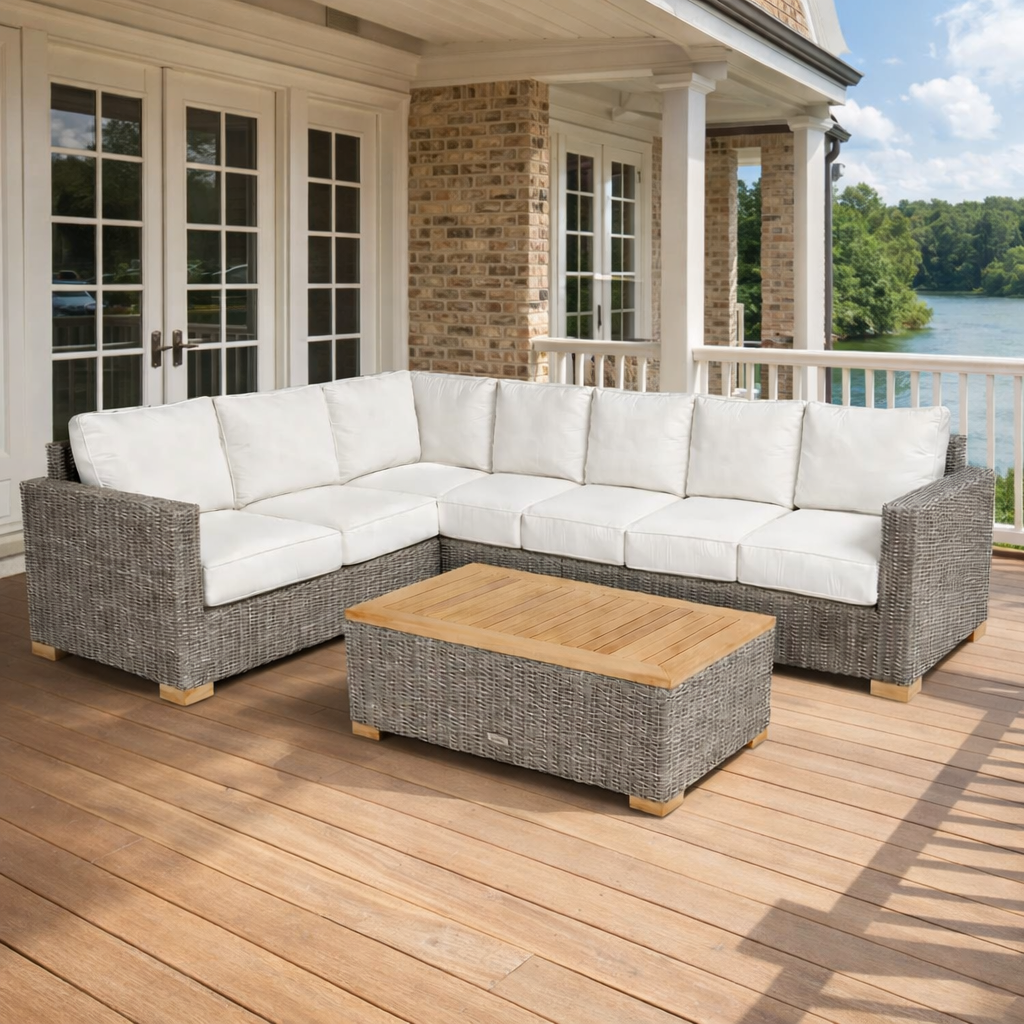
A sofa or sectional with club chairs and a coffee table creates the strongest everyday gathering area. For homeowners who regularly host extended family or weekend guests, multi-piece teak lounge sets can make planning easier because the seating and table proportions are already coordinated.
On a larger patio, combining everything into one oversized furniture grouping usually works less effectively than creating two clear zones. Put dining closest to the kitchen or grill, then position the lounge area where it receives the better view, breeze or shade.
For households that alternate between ordinary family meals and larger weekend gatherings, extendable teak dining tables are particularly useful. The table does not need to occupy maximum space every day, but additional seating can be created when friends or family arrive.
On river, sound or marsh-facing properties, resist the instinct to line every chair parallel to the house. The better approach is often to angle lounge seating toward the water while keeping enough open circulation behind it for people moving between the house, grill, dock or pool.
Swivel seating can be useful when the same chair needs to participate in conversation and turn toward a view. Small side tables are also disproportionately important in waterfront settings because they allow people to settle into the space rather than constantly returning indoors.
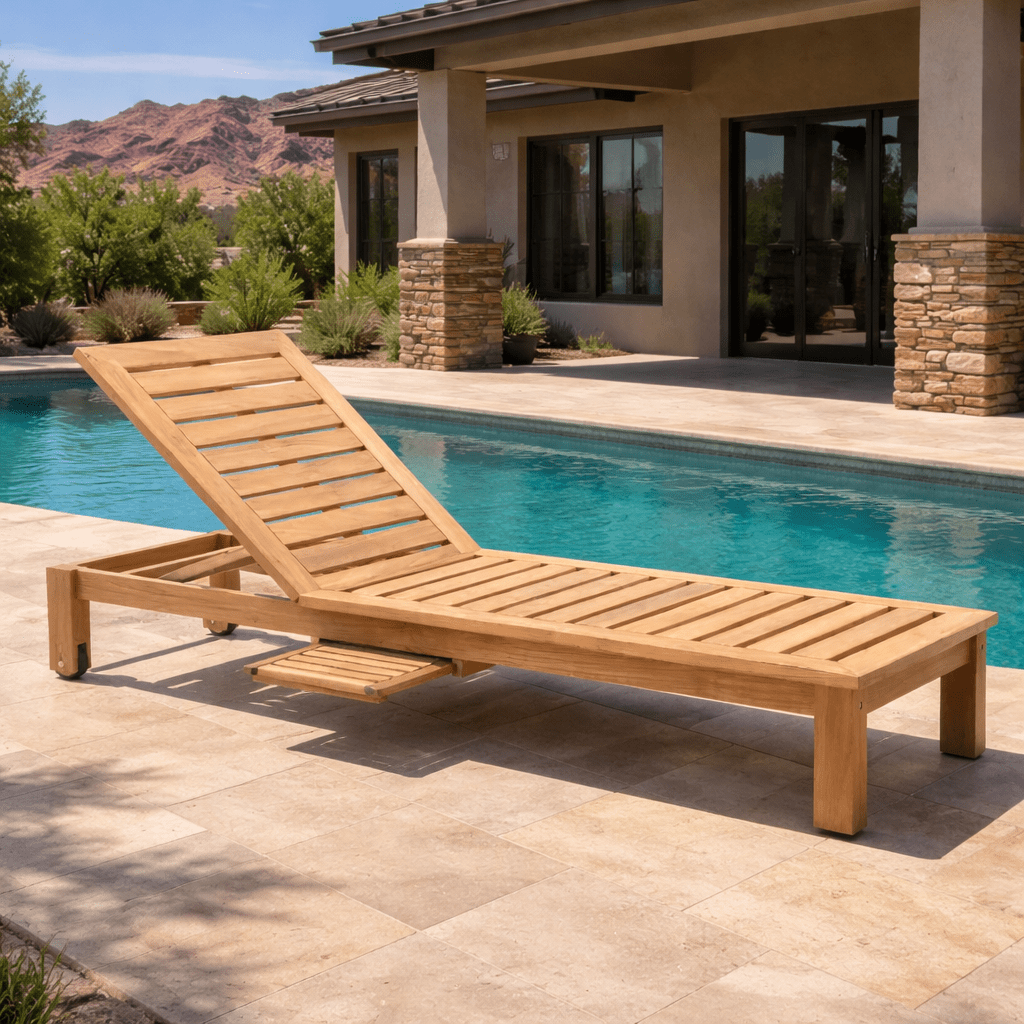
Pool furniture should not be treated as leftover patio seating. A well-designed pool zone needs dedicated reclined seating, convenient drink surfaces and circulation that does not interfere with swimmers. Teak chaise loungers work naturally in this role because teak is designed for outdoor exposure and complements stone, concrete and coastal landscaping without introducing another strongly synthetic-looking material.
Start with the collection that supports the activity your household does most often. Frequent hosts should usually begin with dining or a substantial lounge set; waterfront and pool-focused homes may benefit more from deep seating and loungers; smaller covered porches may call for swivel chairs, a loveseat or a porch swing. The goal is not to fill every available square foot, but to build one or two outdoor rooms that people will actually use.
The strongest Wilmington outdoor spaces function as extensions of the house rather than occasional-use patios. Long warm seasons encourage dining, conversation and pool use outdoors, while screened porches and covered areas make the space more comfortable through sun, rain and insects. Near the water, furniture also becomes part of a broader boating, beach and weekend-guest lifestyle.
In Wilmington, a porch can deserve the same furnishing discipline as an indoor family room. Deep seating works well when the goal is conversation and relaxation, while rocking chairs or a porch swing suit narrower spaces where preserving circulation is more important than maximizing seat count.
The memorable planning insight here is simple: the best furniture location is often not the place with the biggest patio; it is the place where shade, airflow and daily traffic overlap. A smaller covered porch that gets used every evening can deserve better furniture than a huge sun-exposed hardscape that looks impressive but sits empty in July.
Waterfront entertaining tends to be fluid. People move between the house, deck, dock and yard rather than sitting in one place for hours. We like layouts with a defined central lounge grouping plus several independent chairs or secondary seats that can accommodate changing group sizes without making the patio feel overbuilt.
Outdoor meals work particularly well when the table is close enough to the kitchen or grill that serving feels easy. If you entertain frequently, choose table size based on the number of guests you realistically host several times a year rather than the number of people in your immediate household.
For larger gatherings, teak outdoor dining sets provide coordinated options from small configurations through substantial tables for extended families and guests.
Second homes and short-term rentals benefit from furniture that does not require a complicated care routine between visits. Teak can be allowed to weather naturally, which removes the expectation that someone must continually maintain a stained appearance. Cushions and accessories still deserve a clear storage routine, especially when a home may sit unoccupied during changing weather.
 Rather than choosing furniture solely by category, match each grouping to the part of the property where it will work hardest. Wilmington's mix of porches, open decks, pools, gardens and waterfront lots makes a layered furniture plan more useful than one giant matching set.
Covered and screened porches are ideal for couches, loveseats, club chairs and sectionals because they support long conversations and make the outdoor room feel finished. A teak sectional works best when the porch has enough depth to preserve generous walking paths around it; smaller porches are usually better served by a sofa or loveseat plus movable chairs.
Most TeakHQ patio seating pieces include Sunbrella cushions, although specifications vary by item. When comparing pieces, check the individual product details rather than assuming every seat uses the same cushion configuration.
For an open rear patio, we would usually prioritize dining because tables and dining chairs can tolerate periods when the space is not actively being used without visually overwhelming the yard. Six- and eight-person arrangements work for many entertaining households, while extendable tables provide more flexibility where guest counts vary.
Pool layouts work best when loungers are treated as paired functional units: each reclined seating position should have convenient access to a side table. Leave enough space around the grouping for wet traffic, towels and people moving between the pool and house.
Teak also provides a warmer visual counterpoint to concrete, stone and water than an all-metal furniture scheme, particularly when the surrounding landscape already includes live oaks, ornamental grasses or other natural textures.
On patios facing the Intracoastal Waterway, river, marsh or sound, swivel chairs solve a practical problem: guests can face one another during conversation and then turn toward the view without dragging a heavy chair across the deck. This is a configuration decision rather than merely a style preference.
Not every worthwhile seat needs to belong to the main entertaining area. A teak bench placed under a mature tree, along a garden path or near a quiet view can make a large property feel more intentionally furnished. These secondary seating areas are particularly useful when the primary patio becomes busy during gatherings.
Wilmington's outdoor spaces span historic in-town homes, traditional Southern porches, contemporary coastal construction, beach houses and newer resort-style communities. Teak works across that range because the material itself provides the visual warmth; the furniture design can then lean traditional, transitional or modern without changing the underlying material story.
Wilmington's older residential areas often place unusual importance on the porch itself. Traditional teak dining chairs, rockers, benches and restrained lounge pieces can complement that architecture without competing with columns, railings and other original details.
On a historic property, we would generally resist making the furniture too visually aggressive. Let the house remain the architecture and let the furniture support it.
Newer coastal houses often have larger expanses of glass, broad decks, clean railings and more open transitions between indoor and outdoor rooms. Here, teak sectionals, streamlined dining tables and substantial lounge pieces can provide needed warmth against a relatively crisp architectural background.
Beach houses typically benefit from simpler layouts and fewer oversized pieces. Preserve pathways for people carrying towels, coolers and beach gear. Furniture that folds, stacks or occupies clearly defined zones can be more useful than filling every corner with seating.
Teak coordinates especially well with brick, natural stone, pavers and lush coastal landscaping because it ages rather than remaining visually static. Owners can maintain the golden color or allow the wood to develop its silver-gray patina, depending on whether they want contrast or a more weathered coastal look.
 A common mistake is treating every Wilmington patio as the same environment. A protected screened porch and an exposed ocean-side deck may be located within the same market but experience very different amounts of wind, rain and salt influence.
Choose materials and cushion-management routines for the furniture's actual location. Grade A teak helps because the wood itself is designed for outdoor exposure, but exposure still matters for fabrics, accessories and day-to-day upkeep.
A household of four may regularly entertain eight or twelve people. Choosing a four-person table simply because four people live in the home can create an expensive mismatch. Base dining capacity on realistic entertaining patterns, then consider an extendable table if permanent maximum size would dominate the patio.
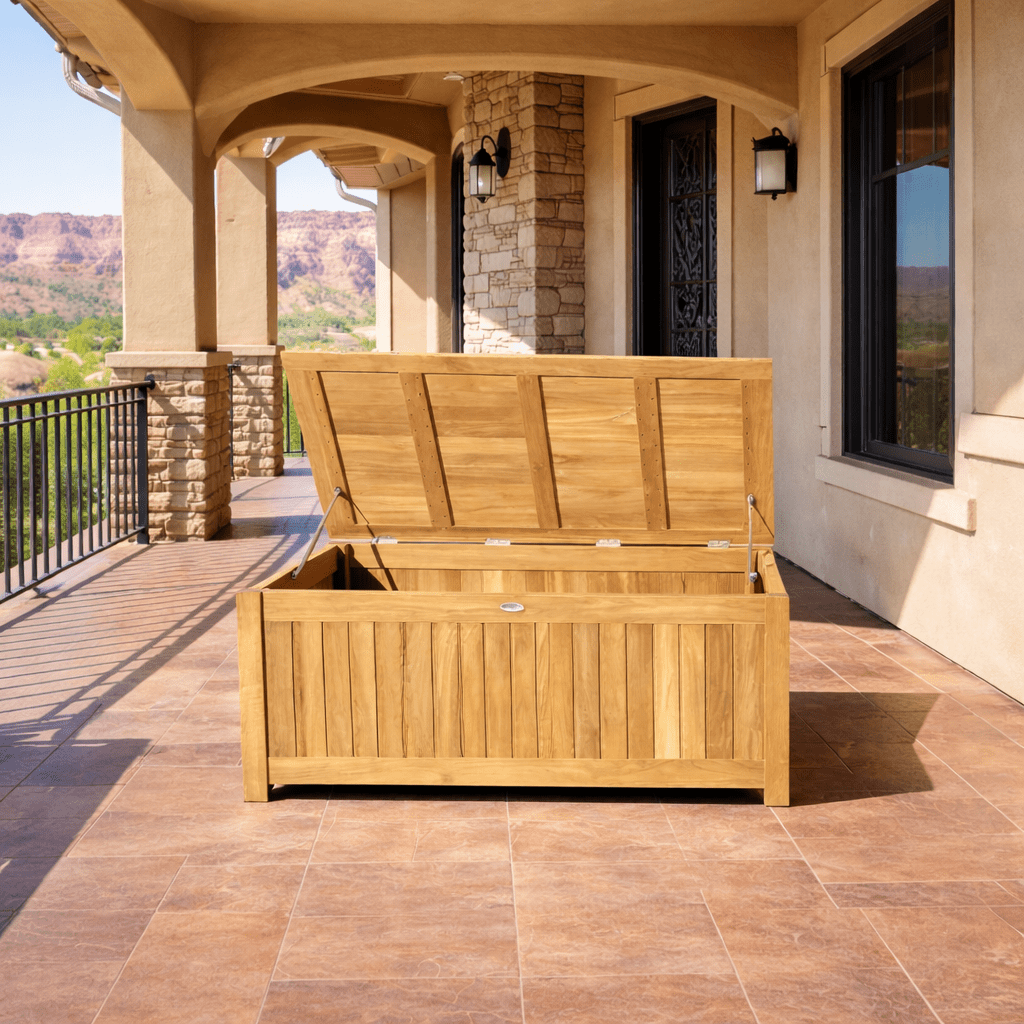
Weather-resistant fabric is useful, but it does not eliminate the need for practical storm preparation. Sunbrella cushions resist fading, UV exposure and water, yet homeowners should still have a place to move loose cushions and accessories when severe weather approaches.
A teak deck box, garage space or dedicated interior storage area can make that routine much easier.
Large patios tempt owners to purchase too much furniture. Coastal entertaining often involves movement between indoor rooms, grills, pools, docks and lawns. Leaving generous circulation space can make the area feel larger and more luxurious than adding another seating group.
No premium outdoor material is literally maintenance-free. Teak can be left untreated and does not require a protective stain for durability, but it still benefits from ordinary cleaning. Cushions, tabletops and shaded areas can collect pollen, leaves and organic debris regardless of the furniture material.
Teak's substantial feel is an advantage in ordinary use, but severe tropical weather is different. Do not select furniture on the assumption that weight alone makes a piece safe during a hurricane. Follow appropriate storm-preparation guidance and secure or relocate outdoor items when conditions warrant.
 The best Wilmington care routine is simple and preventive. The goal is not to protect teak from normal outdoor weather at all costs; Grade A teak is intended for outdoor use. Instead, focus on keeping surfaces reasonably clean, preventing organic debris from sitting in damp areas and deciding whether you prefer golden teak or a naturally weathered silver-gray appearance.
There is no single calendar schedule that fits every property. An uncovered table beneath trees may need cleaning more often than furniture on a screened porch. Inspect pieces periodically and clean when pollen, leaves, dirt or other residue begins to accumulate rather than automatically applying products every few weeks.
Properties closest to the beaches, sounds and open waterways may collect more wind-carried residue than inland homes. Occasional gentle cleaning is usually more sensible than allowing buildup to remain indefinitely. Avoid turning routine care into aggressive scrubbing or unnecessary refinishing.
Humidity affects the entire outdoor environment, including fabrics and debris that sit on furniture. Keep leaves and organic material from accumulating beneath cushions or against wood surfaces, and give furniture reasonable airflow where possible.
If you like the silver-gray color associated with naturally weathered teak, you can allow unfinished teak to age without trying to preserve its original golden appearance. If you prefer the original color, appropriate teak-care products can help maintain that look. This is primarily an aesthetic choice; sealing or oiling is not required simply to make Grade A teak durable outdoors.
Routine rain does not require the same response as an approaching tropical system. Before severe weather, remove or secure cushions, umbrellas and loose accessories and follow local emergency guidance regarding larger outdoor items. A good furniture plan includes a predetermined storage location so storm preparation does not become a last-minute puzzle.
Wilmington's winters do not normally require owners to move Grade A teak indoors for the season. Teak is designed for year-round outdoor use and handles normal temperature fluctuations. Homeowners may still cover or store furniture for convenience, cleanliness or reduced winter use, but doing so is not a basic durability requirement.
Start with the way you actually use your property: the porch you sit on every evening, the table that fills up when family visits, the pool deck where summer afternoons happen or the waterfront view everyone naturally gravitates toward. Then choose furniture that fits those habits and Wilmington's coastal environment. Premium Grade A teak offers a durable, natural and flexible foundation for creating outdoor rooms intended to be lived in for years rather than furnished for a season.
For premium outdoor spaces, Grade A teak, quality aluminum and high-grade synthetic materials can all be appropriate. Teak is especially attractive for Wilmington homeowners who want real wood, substantial construction, natural moisture resistance and the option to leave the furniture outdoors year-round.
Yes. Grade A teak contains natural oils and has a dense grain structure that help it resist moisture, rot and warping. Those characteristics make it well suited to Wilmington's humid coastal environment.
Yes. Premium Grade A teak is designed for year-round outdoor use and can withstand rain, sun and normal temperature fluctuations. Winter storage is optional rather than required for the wood's durability.
Prioritize materials designed for outdoor exposure and choose a layout that accounts for wind, coastal residue and storm preparation. Grade A teak is a strong natural-wood option, while cushions, umbrellas and other loose items should have convenient storage when severe weather approaches.
A cover is optional. Grade A teak does not require a cover simply because it rains. Some owners use covers to reduce cleaning, pollen and debris, but the wood itself is designed for outdoor exposure.
Clean according to exposure rather than following an arbitrary schedule. Furniture beneath trees or near open water may collect debris more quickly than pieces on screened porches. Remove pollen, leaves and residue when buildup becomes noticeable.
No. Grade A teak does not require sealing for outdoor durability. You may use teak care products if you want to influence its appearance, but untreated teak can simply weather naturally.
Yes. Unfinished teak exposed outdoors naturally develops a silver-gray patina over time. This color change is normal. Homeowners who prefer the original golden-brown appearance can maintain it with appropriate care products.
Base the decision on how many people you routinely entertain, not only how many live in the house. A six-person household may want seating for eight or more if weekend visitors are common. An extendable dining table is useful when guest counts change frequently.
Not universally; each material has advantages. Aluminum is lighter and can create a very modern look, while poly furniture is synthetic and generally low maintenance. Teak offers genuine natural wood, greater visual warmth and a substantial architectural feel. For buyers who value those qualities plus long-term outdoor durability, teak is often the better fit.


